* Some questions may have more than 1 correct answer.
Use the search below to find question.
Amount of questions: 347.
Right answers marked with this sign .
Code: eL0j0KeG Where is "AFT" in the figure?
Aft is B.
Aft is C.
Aft is A.
Aft is D.
Code: ??? On the figure there are four (4) possible definitions of the term "BOLLARD" given. Which one is correct one?
Bollard is B.
Bollard is D.
Bollard is C.
Bollard is A.
Code: ??? The figure shows the cross section of a ship floating in water with the hull coloured in red and the seabed below the vessel shaded. On this figure there are four (4) possible definitions of the term "UNDERKEEL CLEARANCE" given. Which one is the correct one?
Underkeel clearance is B.
Underkeel clearance is C.
Underkeel clearance is D.
Underkeel clearance is A.
Code: SMXY In the diagram, the depth of water under the keel is indicated by the letter "C". Which bridge instrument would indicate this depth?
Echo Sounder.
GPS.
Draught Indicator.
ARPA Radar.
Code: ??? On the figure there are four (4) possible definitions of the term "WINDLASS" given. Which one is the correct one?
Windlass is given by A on the figure.
Windlass is given by B on the figure.
Windlass is given by C on the figure.
Windlass is given by D on the figure.
Code: OWGN "Overshoot" is an expression related to a ship's steering ability. What is the correct understanding of this expression?
It is how many degrees of the compass a ship continues to turn after applying counter-rudder.
It is the way a ship turns when you put the helm in a hard over position.
It is the way a ship shoots forward when you give "kick ahead".
It is the way a ship continues to turn when the helm is put amidship.
Code: WTWR Read the text and answer this question: What should be given to prospective seafarers? "It is recommended that every prospective seafarer should before being employed in a sea-going ship, receive proper training in personal survival techniques. In respect of such training several recommendations are made".
Passport and visa.
Recommendations.
Approved training in survival technique.
Survival and protective clothing.
Code: YXWW When acting as helmsman would you expect the reading of the gyro compass to be the same as the magnetic compass?
They would never be the same.
They would always be within 1 or 2 degrees of each other.
Very seldom would they be the same.
They would always be the same.
Code: TCQW What does the term "Hard a Starboard" or "Hard to Starboard" mean?
The wheel is difficult to turn to starboard.
Do not allow the vessel to swing to port.
Start the ship swinging to starboard.
Put the wheel fully over to starboard.
Code: OSDO Who is authorised to operate lifting equipment around the ship?
Those ship's personnel who have been assessed as competent and are duly authorised to do so by the master as per the procedures as outlined in the ship's SMS system.
All deck officers and ratings and selected engine room personnel.
Stevedores, manufacturer's maintenance engineers and senior ratings only.
Deck officers and ratings, engineering officers and ratings, GP crew if applicable, who are in possession of crane operation training certificates issued by the company.
Code: ELPO When two ships are lying alongside each other in a ship to ship operation and one ship is lying at anchor, anchor watch duties must be carried out as follows:
Anchor watch responsibility rests with the vessel which has its anchor down and the ship to ship connections is the responsibility of the other vessel.
Anchor watches are not kept as the duty officers will be on deck conducting the cargo operations.
Both ships have normal anchor watch responsibility in addition to watching ship to ship fendering, mooring etc.
Anchor watch responsibility rests with the discharging vessel which would be the vessel which is anchored.
Code: BFIR Breathing apparatuses is an important piece of equipment for being able to fight a fire onboard a vessel. What routine precautions to be observed with regard to use and maintenance of such equipment?
That personnel having a beard are not selected as smoke divers.
That personnel that are appointed as smoke divers, primarily are given a shore based proper basic education and training.
That the equipment always to be kept cleaned, checked and bottles are recharged immediately upon use, and frequently inspected.
All the mentioned alternatives.
Code: QYUD What kind of safety clothing should be worn during a mooring operation?
No particular safety clothes are required.
Safety shoes and boiler suit.
Gloves and helmet.
Helmet, safety shoes, gloves and protective clothes.
Code: ??? In the figure, which arrow indicate the direction "ASTERN"?
Astern is indicated by D, in the figure.
Astern is indicated by B, in the figure.
Astern is indicated by A, in the figure.
Astern is indicated by C, in the figure.
Code: PAOY What is the normal name of the waterproof suit shown in the picture?
Survival suit.
Wet suit.
Fluorescent orange suit.
Life suit.
Code: KLAP What is the meaning of the term "Make Fast", when mooring the ship?
Make Fast means to act very quickly.
Make Fast means secure the ropes to the bits.
Make Fast means to to avoid eating all meals during the daylight hours.
Make Fast means to coil up a rope.
Code: FNCM What is understood by the term "Boat Drill"?
"Boat Drill" means the practical training in the various aspects of getting all the people onboard safely off the ship, in the event of abandoning ship.
"Boat Drill" is an exercise to launch the lifeboats and move the boats clear of the ship.
"Boat Drill" is an exercise in the practical and safe methods to secure a boat alongside the ship.
"Boat Drill" means an exercise in the safe methods of handling a lifeboat in heavy seas.
Code: HFRA Give the meaning of the following symbol:
Secure hatches.
Fasten seat belts.
Fasten lifejacket belt.
Secure buoy line to the ship.
Code: HDKP How much food per person is supplied on a liferaft?
Not less than 20 000 kJ.
None, only barley sugar sweets supplied.
Not less than 10 000 kJ.
Not less than 5 000 kJ.
Code: AECJ A drip tray containing oil is on fire. The only fire fighting equipment available is water hose with spray jet/spray nozzle. How, if at all, should you attempt to put out this fire using water?
Water should be applied in a jet to the back of the fire.
Water should be applied to the oil in a single jet only.
Water should not be used on any type of oil fire.
The water can be applied in a fine spray starting from the front in a sweeping motion.
Code: SKFX Which of the following are frequent causes of fires in accommodation?
1. Smoking in bed. 2. Covering of electric fires with blankets. 3. Overloading electric plugs.
Smoking in bed.
Covering of electric fires with blankets.
Overloading electric plugs.
Code: AIGK What is the main responsibility of a bridge lookout at night?
Inform the bridge of any new lights when they appear over the horizon or any other items observed which may affect the ship.
Inform bridge of changing weather patterns.
Inform bridge of any lights when they appear over the horizon.
Inform bridge of any other ships observed, which appear to be getting closer to your own ship.
Code: VPHS During restricted visibility, you are posted as bridge lookout and you hear 1 long blast at intervals of about 2 minutes on your port bow. What will you report to the OOW (officer on watch)?
Power driven vessel under way and making way on the port bow.
A vessel at anchor on port bow.
Fog signal of one long blast heard on the port bow at regular intervals of about 2 minutes.
Power-driven vessel making no way on port bow.
Code: RXCL What will you do if you are helmsman and the OOW (officer on watch) gives you the order: "Starboard ten"?
Repeat the command back and then turn the wheel to make the rudder turn 10 degrees to starboard of amidships.
Repeat the command back and then allow the vessel to drift 10 degrees to starboard of original course.
Repeat the command back and then put the wheel over sufficiently for the ship to swing at a rate of 10 degrees per minute to starboard.
Repeat the command back and then change course 10 degrees to starboard of present course.
Code: IIES How will you act if you are helmsman and the OOW (Officer on Watch) gives you the order: "Nothing to port"?
Let the ship turn to starboard.
Alter course to starboard.
Don't give port rudder.
Don't let the ship turn to port.
Code: ITPC What is the signal actuated by a detection system?
A visual and audible alarm signal at the control panel.
A visual signal at the control panel.
An audible and visual signal consisting in 7 short signals followed by a long one.
An audible signal at the control panel.
Code: YJGQ What are the main components of the atmospherical air?
Code: DQKN In which one of the following an oil, the flash point of which only needs to be over 43 °C, may be used?
In emergency generators.
In inert gas generators.
In the main engine.
In the kitchen.
Code: ISUD Which of these series of sizes corresponds to the international standard for nozzles?
12 mm, 16 mm and 19 mm.
5 mm, 10 mm and 20 mm.
10 mm, 20 mm and 30 mm.
10 mm and 20 mm.
Code: NXCC What alarm signal must be sounded by the alarm bells in case of fire?
A continuous signal.
Series of short blasts.
The signal which is stated in the muster list.
One long blast followed by 7 short blasts.
Code: HFMT Which part of the float-free arrangement for inflatable liferafts is made to release the liferaft after being automatically inflated during the ship is sinking?
The hydrostatic release unit.
The painter.
The weak link.
The lashing strap.
Code: HYDL The wearer of a lifejacket can jump into the water without injury and without damaging the jacket from a height of at least:
7 m.
12 m.
10 m.
4,5 m.
Code: YXCS A person wearing an adult lifejacket shall be able:
To dive half a meter under the water surface.
To jump from any height into the water without being injured or damaging the lifejacket.
To swim a short distance through the water and board a survival craft.
To swim half a mile distance and board a survival craft.
Code: OWFT Which of air and water is the fluid that transfers the greatest amount of heat during the same time, given that the fluid is not flowing along the immersed body?
Water.
Air.
Both are transferring equally.
Air if the temperature of the fluid is 10 °C; water if temperature of the fluid is < 10 °C.
Code: NPLF, RBEN Which one of the following types of rope is the most dangerous to work with?
Manila.
Nylon.
Steel wire.
Polypropylene.
Code: NNPQ, NKTF The responsibility for safety and security rests with everybody on board the vessel. General house-keeping rules should be followed. Which of the listed rules is the most important?
Keep your working area clean and tidy.
Always use gloves when using grinding machines.
Keep tools within easy reach during work.
Do not carry lighters or matches when working outdoors.
Code: VVBI Which Security Levels requires the highest security alert?
Security Level 2.
Security Level 3.
Security Level 1.
I don't know.
Code: NVCD What do crew, visitors and contractors all have in common?
They're all onboard the ship for the duration of its voyage.
They all have opportunity to smuggle drug.
They're all employees of the ship.
They're all trained in ship emergency procedures.
Code: DBRU On board a container vessel conducting loading operations in United States, you notice an unsafe stevedore working practice. If you do not correct this immediately, it may result in:
The ship will be prosecuted.
The master will be arrested.
The port will lodge a protest against the ship.
The duty officer will be arrested.
Code: BXHR What must be done as soon as reefer containers have been loaded?
They must be connected to the ship's power supply and their setting temperatures verified.
Their setting temperatures must be verified.
Their stowage positions must be reported to the duty officer.
They must be connected to the ship's power supply.
Code: VMEJ A "Fantainer" is used for:
Carrying dry cargoes prone to condensation.
Carrying dangerous goods prone to condensation.
Carrying reefer cargoes prone to condensation.
Carrying steel coils.
Code: YMEC On a Container vessel, under which IMDG Class is fishmeal normally carried when treated with anti-oxidant?
Class 9 - Miscellaneous dangerous substances and articles.
Class 4.1 - Flammable solid.
Class 4.2 - Flammable solid.
Class 5.1 - Oxidizing substance.
Code: RHFC As per IMDG Code, fishmeal not treated with anti-oxidant, would be carried on a container vessel under:
Class 4.2 - Flammable solid.
Class 4.1 - Flammable solid.
Class 9 - Miscellaneous dangerous substances and articles.
Class 5.1 - Oxidizing substance.
Code: SEBU On a Container vessel, containers containing marine pollutants are stowed:
Under-deck.
In the last container bay on deck.
Anywhere on deck at the extremity of a container stow.
In the foremost container bay on deck.
Code: QLMC On a Container vessel, duty crew members must supervise the lashing of containers, because:
It is an international requirement under the ISM Code.
Because of local port regulations.
Stevedores often apply container lashings haphazardly or place twistlocks incorrectly.
Because of time constraints on the vessel towards the end of cargo operations.
Code: KLHX The term OSHA stands for:
Occupation and Safe Health Association.
Occupation Safety and Health Aids.
Overseas Sea Hazard Association.
Occupational Safety and Health Administration.
Code: NYNA What general background colour is used on warning signs that indicate emergency or first-aid features, or indicate a safe condition?
Green.
Yellow.
Red.
Blue.
Code: NPOT What is the meaning of "Make fast"?
To coil a rope.
To secure a rope.
To avoid all meals.
To act quickly.
Code: OVFY What do you understand by "Bitter end"?
Bitter end means: the end link of an anchor cable that is secured within the chain locker.
Bitter end means: the toggled end of a lifeboat painter.
Bitter end means: to the very last moment.
Bitter end means: a foul taste at the end of a meal.
Code: WDEJ Which of the following is false when a casualty is bleeding?
Cover the wound with a cloth.
Control bleeding.
Treat for the shock.
Encourage patient to lie quite and re-assure.
Code: PYPE All heat burns should be:
Cooled as quickly as possible with running cold water for at least 10 minutes.
Covered with Gauze or bandage immediately.
Applied with soothing lotion as soon as possible.
Treated by the doctor only.
Code: YSQG Port State Control Officers are authorised to:
Detain ships that are not meeting the requirements for a minimum of 30 days.
Regularly inspect ships known to meet the requirement.
Sign oil record book entries.
Inspect and detain ship that are not meeting the requirements until they are able to demonstrate compliance with the regulations.
Code: OSOO Which of these emission control requirements is correct?
Low sulphur fuels reduce emissions of volatile organic compounds.
Installation of an exhaust gas cleaning system reduces emission of nitrogen oxide.
Equipment containing ozone-depleting substances may be dumped at sea 50 miles from land.
Incineration of PCB's is permitted.
Code: OIQO On a Container vessel, containers with untreated fishmeal cargo are carried:
On deck.
Separated from class 4.2 containers.
Under deck.
On deck away from sunlight.
Code: DWDH On a Container vessel, the purpose of fixed stacking cones is:
To prevent horizontal movement of 20' containers in 40' cell guides.
To prevent the horizontal movement of 40' containers at tank top level.
To prevent movement of 20' and 40' containers at deck level.
To prevent the horizontal movement of 20' containers at tank top level.
Code: AJAS On a Container vessel, a mid-bay guide is positioned:
On the tank top at the ends of 40' container bays.
Between 20' container bays on deck.
On the tank top mid-way in 40' guides to prevent transverse movement of 20' containers.
At the base of cell guides.
Code: FJHK A container vessel's hatch pontoon quick acting cleat will need to be replaced:
When the rubber washer is compressed and hardened.
When the cleat has sprung open at sea.
When the cleat retainer is rusty.
When the cleat retainer is distorted.
Code: DAMK The function of a lashing plate on a container vessel is:
As tie down point for turnbuckles on deck or hatch cover.
A means of securing buttresses under-deck.
A means of securing the hatch covers.
A means of securing lashing chains.
Code: oQgcmZAB You are onboard a vessel off the West African coast. You want to dump a mixture of food waste, glass bottles and floating packing materials. Is this allowed? And if so, how far off the coast would you have to be?
This is prohibited.
25 nautical miles off the coast.
12 nautical miles off the coast.
3 nautical miles off the coast.
Code: 7GfTmuxT The vessel is 20 miles off the coast and disabled because of engine failure, which will require at least 24 hours to repair. What initial actions should be taken to ensure the safety of the vessel?
Steer away from danger until the vessel looses way, then if possible drop the anchor.
Display NUC lights and inform the nearest Coast Guard of you predicament.
Code: 5VMaSgzC Your vessel is proceeding along a narrow channel in front of another one. You hear this signal from the vessel behind you. What does it mean?
I intend to overtake you on your starboard side.
I am operating astern propulsion.
I intend to overtake you on your starboard side.
I am faster than you. Get out of the way.
Code: bgvLdZ3U For guidance on lashing arrangement of containers on-board the vessel, the most important document to refer is:
The Code for the Safe Practice for Cargo Stowage and Securing.
The Stability Manual.
The Cargo Securing Manual.
The company's ISM handbook.
Code: z9LBY6tj The most effective method of dealing with an under-deck cargo space fire on board a container ship, is to:
Deploy the fixed firefighting system.
Boundary cool the cargo hold from the deck.
Tackle the fire locally with fire hoses.
Turn the vessel off the wind to reduce the relative wind strength.
Code: mqsqn6eH What is the daytime signal to be shown when the vessel is at anchor?
A black ball forward where it can best be seen.
A black diamond forward where it can best be seen.
Two black balls where they can best be seen.
The national flag flying from the fore mast.
Code: js9GdiSL As a minimum, how often shall life boats be launched with their assigned operating crew aboard and manoeuvred in the water according to SOLAS?
Every three months.
Every week.
Every two weeks.
Every month.
Code: 1lrnrZui Best location to stow containers loaded with Calcium Hypochlorite would be:
Under deck, away from sources of heat.
On deck, away from sources of heat.
Abaft the accommodation.
Away from reefer units, below deck.
Code: CH43HhgX A typical hazard associated with the carriage of ammonium nitrate is:
Explosion.
Spontaneous combustion.
Loss of ship stability.
Environmental pollution.
Code: NEKni0pd During an audit, adherence to the company cargo handling proceudres can best be demonstrated:
By being able to provide comprehensive and verifiable documentary records of cargo operations.
By requesting that an audit takes place during cargo operations.
By providing a summary of out-turn figures for the auditor.
By providing a summary of incident and lost time figures for the auditor that reflects a successful and trouble-free system on board.
Code: #DgVQcLs The number of frequencies on which a MF/HF-DSC distress alert multi-frequency call attempt can be transmitted is:
6.
5.
3.
2.
Code: kVxp4gzt Which organization verifies the computational results and stored ship data used by the stability program loaded on a vessel's computer?
The Classification Society.
The master.
The manufacturer.
The engineer attending the installation and initial on-site testing.
Code: ToejJT#h What radar device assists in the detection and location of a survival craft?
SART beacon.
EPIRB beacon.
AIS beacon.
A personal locator beacon.
Code: qxB9pWXg Who is the leader of the lifeboat drill (abandon ship drill)?
Sen. Off. Deck.
Sen. Off. Engine.
The first member of the crew arriving at the survival craft.
Every report or message must be logged including time and date.
Only verbal reports for documentation.
Only initial reports to be logged.
Only communication with USCG.
Code: KTNuxhiO You are a Senior Officer of the Watch on vessel "A" and are passing through the Straits of Gibraltar. The vessel's speed is 18 knots and your vessel is overtakiing several other vessels, when the visibility reduces down to about 2 nm. What aspects would you consider when establishing a "safe speed" for your vessel?
Deciding safe speed consider: 2 miles visibility; traffic density; manoeuvrability of vessel; effectiveness of navigational equipment (ARPA etc.); state of sea and currents and navigational hazards.
Adjust my track to follow Route 1 or 2 illustrated and reduce speed down to half speed, approximately 8 knots.
Safe speed should be where the vessel can come to a stop within the visible range.
A safe speed is where a vessel can take proper and effective action to avoid collision and be stopped within an appropriate distance.
Code: R#TSUjsb According to Rule 24 of the International Regulations for Preventing Collisions and the illustrated lights, how long is the tow likely to be?
It exceeds 200 metres.
It is more than 50 metres but less than 200 metres.
It is less than 200 metres.
At least 100 metres.
Code: cQeZnuXm When a character in the NAVTEX message sent is not received in the proper way:
The message will not be printed at all until, with repeated transmission it can be automatically compared and corrected.
Any other character will be printed.
Nothing or a special character will be printed.
A closely resembling character will be printed.
Code: nkbAeKyV Under what convention is the master to ensure that a ship is seaworthy and in a fit state to safely carry a shipper's cargo?
The Hague-Visby Rules.
The Antwerp Convention.
The Nassau Protocol.
The Paris Memorandum.
Code: 8iVeJ2vQ Where several rescue units are engaged in a search and rescue operation, one of them may be designated as the On-Scene Coordinator (OSC). Which of the following describes how this appointment will be made?
The OSC will always be designated by the Search and Rescue Mission Coordinator.
The coastguard will appoint the OSC using their vessel database to assess suitability.
The role of OSC is only taken by a naval ship close to the area.
An aircraft is usually appointed as the OSC because of their speed.
Code: 8h2R1api A lead battery of 200 Ah, in accordance with the DIN-standard, must be able to supply:
6 ampere during 20 hours.
1 ampere during 200 hours.
10 ampere during 20 hours.
200 ampere during 1 hours.
Code: fK9bDp$I Besides normal loads, the lashings of the containers stowed at the outboard part of the deck stow are additionally subjected to:
The effect of wind on the containers.
Transverse accelerating load condition, leading to loss of GM.
The effect of green seas breaking over the containers.
Lack of support from adjacent columns of containers.
Code: akKdY2rA With respect to the ISM, what training in addition to lifeboat and fire drills must be carried out?
Familiarization, and other drills identified as necessary by the ship.
Mooring operations.
The boat drill and fire drill should be adequate to meet your needs.
Bridge Team Management.
Code: dCLqn#7P Which of the following information shall be specified by the muster list?
The specific duties assigned to passengers that are in charge of a group of others.
Action to be taken by crew and passengers.
The abandon ship signal consisting of two long blasts.
The muster list has been prepared and approved by the administration before the ship proceeds to sea.
Code: W3fThsYR The correct weight of a wrongly declared container may be best indicated by:
Strain gauges fitted to the shore gantry cranes.
The ship's loading computer.
The tare weight stamped on the container.
The container CSC plate.
Code: m96FEHAR What does heaving result in?
Vertical accelerations acting along container corner posts.
Tipping of containers.
Shearing of container twistlocks.
Longitudinal accelerations acting on hatch pontoons.
Code: 222wi#Xe As a result of being in collision with your vessel, the other vessel involved is on fire? What are your responsibilities to it?
The other vessel is in distress and if possible I will render assistance.
You should continue on with the voyage if your damage is not serious.
There is no statutory requirement to provide assistance as the actions of that vessel were the primary cause of the collision.
Your vessel should manoeuvre close to the other vessel and aid the fire fighting operation.
Code: qXe58VF4 Why would a very large container vessel pitch more than a feeder vessel?
Because pitching varies with ship's length.
Because vessel pitching varies with propeller pitch.
Because container stacks on large container vessels are more exposed to wind forces.
Because very large container vessels are more exposed to open sea conditions.
Code: bWVMfSWd The most appropriate measure to reduce the build-up of ice on containers during a sea passage is to:
Reduce speed, whilst maintaining course.
Increase speed, whilst maintaining course.
Have the crew remove the ice.
Heave to and wait for ambient temperature to rise to safe levels.
Code: ZFntkHW8 Carriage of wet scrap steel borings, turnings and swarf in containers is generally considered dangerous, because:
It can spontaneously ignite.
The moisture will cause a huge increase in the weight of the cargo.
The cargo will not dry out en route enroute.
This type of cargo will corrode the container.
Code: 73lelEbx The transmitting power of the VHF is adjusted by setting:
High/Low power.
PTT.
Dual watch.
Squelch.
Code: NAsRl1UN On board they want to have a dial-phone cal via Inmarsat with the Apollogracht. In the guides the following ID's are found for the Apollogracht: 344320000, 424432010, 424432020, 1300210, 36715. What ID should be chosen:
344320000.
424432020.
1300210.
424432010.
Code: $nH0cUZ5 If requested by a costal radio station to participate in a rescue operation, what is the most important information you may give?
Your vessel's position, name, call sign and speed.
Your vessel's destination.
Your vessel's own cargo owner.
Your crews nationality.
Code: CIZEIEhP As per the IMDG Code, an "article" is referred to as:
Something that is packed within a freight container.
A device that is responsible for initiating a dangerous reaction.
A device that contains a dangerous substance or mixture of substances.
A form that contains important information about a hazardous.
Code: RKaO5x6F What is usually the effect on G when the ship is damaged below the waterline, with water ingress?
It lowers.
It is unchanged.
It rises.
It first rises then lowers.
Code: PC71fyfK The dangers associated with carriage of empty tank containers is that:
They may contain flammable cargo residue.
They could explode if their vents are closed.
They may not be declared as being empty.
They are prone to collapse.
Code: fZG74qko A hand flare must have a burning period of at least:
1 min.
10 min.
5 min.
30 sec.
Code: FJ$rRzGW Code signals concerning requests and general information on medical matters normally consist of:
Letter M plus two other letters.
Letter D plus two other letters.
Letter P plus two other letters.
Letter H plus two other letters.
Code: 0ygu3UcC What must be done if the Oil Discharge Monitoring Equipment (ODME) should fail during a ballast voyage?
All of the mentioned must be performed.
The failure must be repaired.
The failure must be noted in the Oil Record Book.
If the failure cannot be repaired onboard, the ODME must be repaired before the ship commences its next voyage.
Code: SEn1Tvt A vessel has been in involved in a collision. Which procedure should happen immediately?
Communicate with the other ship.
There is assessment of the damage stability.
Determine is there is any evidence of pollution.
Determine any injuries of persons on board.
Code: 6XuGJO$4 As per SOLAS regulations, the general emergency alarm system must be tested:
Every week.
Every month.
Every 2 weeks.
Every 3 weeks.
Code: Cnb7$M2h It is the Master's responsibility to ensure that:
Concerned personnel carry out the on-board training programme effectively.
All information regarding the onboard training is given to the ship manager.
Safety equipment is not used during the training.
Life jackets are worn during every training.
Code: QL7WLPwo The Training Manual shall contain instructions and information on the life-saving appliances and the best method of survival. The training manual shall contain detailed explanations of crew duties in relation to emergency situations. Which of the following tasks or duties shall be included in the manual according to present regulations?
The use of surface to air visual signals to be used by survivors.
The use of navigational equipment for survival crafts.
The use of the ship's line throwing apparatus.
The use of escape routes and other escape methods.
Code: eYgUKHgu If a coast-station doesn't answer a call on VHF working channel or doesn't send a reply signal:
You can repeat your call after 2 minutes.
You can repeat your call immediately when convinced that no other radio traffic is interfered with.
You must call on another working channel.
You must call on distress channel.
Code: py9M9C1d How are ship's stability characteristics affected by Parametric Rolling?
By the constant change of underwater hull geometry as waves travel past the ship.
By the development of a negative GM.
By the virtual loss of GM.
By an increase in the angle of pitch.
Code: rkqVtTKu For security purposes, the IMDG Code should be read in conjunction with the:
Chapter XI-2 of SOLAS and Part A of the ISPS Code.
Chapter V of SOLAS and Annex II of MARPOL.
IMO NVIC 24 and 46 CFR 2.05.
Part B of the ISPS Code and Chapter II of the Maritime Transport and Offshore Facilities Act.
Code: 9VnxUVot An inspection in the amidships area of the weather deck of a Panamax container vessel has revealed cracks in the hatch coamings. It is extremely important to urgently inspect the:
Longitudinals in the double bottom tanks in the amidships half length of the vessel.
Transverse bulkhead immediately aft of the engine room.
Stiffening in the forepeak tank at approximately water line level.
Transverse bulkhead beneath the bridge front.
Code: 8GHUbth# In area A1 the function "Transmission and reception of signals for locating" is mainly based on:
The use of VHF DSC.
The use of Inmarsat Epirbs.
The use of SARSAT COSPAS Epirbs.
The use of SART transponders.
Code: dWzUPiSC The International Maritime Bureau Piracy Reporting Centre attributes the increased numbers of hijacking to:
Higher crime rates around the world.
More crew involvement.
The greater involvement in piracy of well-organized and armed crime networks.
Easy access to military weapons.
Code: GlAF7lYb Which statement best describes how land moves, if at all, on an ECDIS set in North-up, relative-motion mode?
Land on the chart screen moves relative to the ship symbol.
The land is always in the middle of the screen.
Land is stopped with the vessel symbol moving across the sea floor.
This is a feature only seen on radar displays.
Code: 7TDyWQ7V The Code of Safe Practice for Cargo Stowage and Securing was prepared to give guidance for:
Securing of deck cargoes.
Port State Control Officers when carrying out ship inspections.
Securing of cargoes in hazardous ocean areas.
Preparation and content of the Cargo Securing Manual.
Code: q3EcXv#u When may a call for radio medical advice be preceded by the urgency-signal:
Always.
When you have a doctor on board.
In urgent cases.
Never.
Code: Sqvndz6F Which of the following requirements regarding life-buoys correspond to present regulations? (SOLAS III/7.1).
Not less than half the total number of lifebuoys shall be provided with self-ignighting lights.
All the life-buoys shall be placed in holders with quick-release arrangement.
At least four life-buoys on each side of the ship shall be fitted with buoyant lifelines.
At least one lifebuoy with self-activating smoke shall be placed within the vicinity of the stern.
Code: 4CD7oIYu When a vessel is undertaking a long canal transit with locks and lots of activity, what management issues should the Master consider?
All of these answers.
Lack of sleep and fatigue of bridge officers.
Fully manned engine room throughout the canal transit.
Suitable crew available for lock transits.
Code: QWSUQ5tk Messages sent via Inmarsat C are charged:
On the number of kilobits of information transmitted per block of 1 024 bits.
On the basis of a three minute minimum charge with one minute incremental steps.
On the number of kilobits of information transmitted per block of 256 bits.
On the basis of a six second minimum charge with six second incremental steps.
Code: $isgC#a5 What is the purpose of the "SQUELCH" on a VHF transmitter/receiver?
Reduce the "noise" in the background.
Increase the sound signal of the receiver.
Switch to another channel.
Increase the range of the transmitter.
Code: HamlF4nL For a ships loading computer to be safely used for loading planning and stress calculations, it must be approved by:
A Classification Society.
IT Department of Ship owner.
The Port State where vessel is currently loading.
Hull and Machinery Insures of the vessel.
Code: Tt167MN9 What type of dynamic forces may cause indent in plating on forecastle deck and main deck in way of pillars inside forecastle?
Pressure forces caused by green water on deck.
Slamming in way of flat bottom forward of light draught.
Forces created by waves on the forecastle.
Impact pressure forces in way of abrupt or flared bow.
Code: 4moiQ4Nx If all indications are that a cargo has been received without damages, irregularities or short shipment and the phrase "apparent good order and condition" is entered on the Bill of Lading, then this Bill is this said to be:
A clean Bill of Lading.
An endorsed Bill of Lading.
A Bill of Lading completed for shipment.
A Due Title Bill of Lading.
Code: gt$Noelh What is the correct setting of the "Anti sea clutter" control on the radar?
A few sea returns remaining around the own-ship position.
No sea returns left on the screen so that a small target will be seen.
All of the suggested answers.
A removal of all the sea returns up to about three miles from own-ship.
Code: qHTXCft7 What does the term DISCHARGE mean, as used in the Oil Pollution Regulations?
Spilling.
Leaking.
All the other alternatives.
Dumping.
Code: hObYnU1t How frequently should reports from protection and environmental work be sent to shore based management?
Biannually.
Not mandatory to send reports.
Annually.
Every three years.
Code: yPRF1OVn Master of every ship must provide:
Facilities to conduct training whenever required by the training officer.
Proper rest to the crew after each training programme.
The training during crews working hours only.
A link between the shipboard training officer and the company training officer ashore.
Code: m11wTkHC By the term "Stand by" the operator of a coast-station means that one should:
Wait until the coast-station calls again.
Switch back to the calling channel.
Give the position of the ship.
Wait on this channel for one hour.
Code: KVjnwxa7 If drugs or suspected drugs are found onboard your ship, follow the five C's: Confirm, Clear, Cordon, Control and:
Chuck.
Check.
Cheer.
Change.
Code: BMHZwluS What type of search pattern is recommended in the IAMSAR Manual as most effective for a single vessel, when the location of the search object is known within relatively close limits?
Sector Search.
Track Line Search.
Expanding Square Search.
Parallel Sweep Search.
Code: 9DQwuCM8 The frequency 121,5 MHz is used for:
COSPAS-SARSAT EPIRBS.
Inmarsat E EPIRBS.
SART transponder.
DSS VHF calls.
Code: bhsbi5eN What do you understand by the term "Risk Assessment", and how would this be carried out on board?
Identify the hazards, quantify the risks, put control measures in place, monitor the work activity and review.
States than when work has a degree of risk that the work is not carried out.
Identify the hazards and specify the personal protective equipment that would be required to complete the work.
Requires a great deal of preparation and involves recording everything on paper.
Code: IPKKMWr7 A vessel has lost several containers overboard during a voyage. Upon arrival into port, she is being inspected by the attending surveyors. The most important item to be checked during this inspection would be:
Certificates of approval related to lashing equipment used to secure those containers.
The vessel's Class certificate.
The on-board cargo lashing inventory.
The vessel's Safety Construction certificate.
Code: v8e8ZnkE Why does a ship with ahead or astern speed, have a small lateral or sideways movement when turning?
The hydrodynamics of the hull cause a drift angle to be produced, which is not in the fore and aft line of the vessel.
The ship moves laterally because of all the external forces on the vessel hull caused by the environment and possibly a tug.
The ship moves laterally because it has a single hull.
Because the rudder is positioned at the stern of the vessel.
Code: AsuH5aGO Exposure to moderate concentrations of ammonia may cause:
Instant death.
Loss of memory.
Instant unconsciousness.
Chocking and possible loss of eyesight.
Code: 58ZBUXHs The most dangerous consequence of the corrosion and wear down of container stools on weather deck/hatch tops of a container vessel would be:
Collapse of the deck stool, leading to lashings becoming slack.
Twist locks not being able to be fully closed.
Twist locks not being able to be removed after discharge.
Uneven loading of the container on the deck.
Code: Z73lETGI On a ship involved in a collision, what should happen immediately after the accident has taken place?
The bridge team should devise a plan of action.
The other ship should be contacted.
Crew should follow an emergency procedure.
The master should be called.
Code: m5vgZ006 The correct functioning of a DSC-modem can be checked by means of:
The built-in test facility in the modem.
Tester provided with the equipment.
The testing-mode of the ever present VHF-DSC-EPIRB.
The obligatory monthly transmission from the RCC's.
Code: bACBeuXi For a container stowed in a position equidistant from the roll and pitch axes of a ship, what will quarter the acceleration forces acting on it?
Doubling the roll period.
Doubling the pitch period.
Halving the roll period.
Halving the pitch period.
Code: IPI4RcdL What does heaving result in?
Vertical accelerations acting along container corner posts.
Longitudinal accelerations acting on hatch pontoons.
Shearing of container twistlocks.
Tipping of containers.
Code: TXBWtnn1 In case of a pollution in US waters, who shall notify the cleaning up contractor (OPA-90)?
Qualified Individual.
The shipowner.
The Master.
Emergency response team.
Code: 34leOgsw Which organization or administration is responsible for surveys and inspections of ships, and the issue of Safety Certificates?
Government Authorities of the Flag State.
Ships Classification Associations (Lloyd's, American Bureau of Shipping, The Norwegian Veritas, Germanische Lloyd's, etc).
International Labor Organization (ILO).
International Maritime Organization (IMO).
Code: UkkdzVLA What items of container securing equipment must be used in conjunction with buttresses?
Double stacking cones or link plates.
Single stacking cones.
Single stacking cones and bridge fittings.
Twistlocks.
Code: PaESR1i2 Which option best describes what is meant by the Consistent Common Reference Point on a vessel?
It is a point on the vessel common to all position related sensors.
It is a position that the radar scanner is in.
It is a position that the GPS aerial is in.
It is a term associated the ECDIS time constant.
Code: FcMDoP47 The most important consideration, in terms of stress, when planning stowage of containers on a container vessel would be:
Distribution and weight of the containers.
Distribution of the containers only.
Weight of the containers only.
The vessel's draft and trim.
Code: 5lc7cVji As per SOLAS regulations, the general emergency alarm system must be tested:
Every week.
Every 2 weeks.
Every 3 weeks.
Every month.
Code: apcGTlwq Which of these tasks are performed as part of the SSA?
Assess the likelihood and potential consequences of security incidents.
Implement measures to address weaknesses in ship security.
Train shipboard personnel in their security duties.
Assign security duties to ship personnel.
Code: lwmRaPc9 What is most important for crew members when preparing for emergencies?
That people are well trained.
That people know where to muster.
That people listen to orders given.
That people know to find designated equipment.
Code: eWyPaW36 What roll amplitude is generally used by classification societies in calculating rolling forces?
24-30 degrees.
30-36 degrees.
18-24 degrees.
37-42 degrees.
Code: zZWqMTVX What is the name of the reference manual, jointly produced by the International Maritime Organization and the International Civil Aviation Authority, which currently outlines the organization and management of search and rescue activities at sea?
The International Aeronautical and Maritime Search and Rescue (IAMSAR) Manual.
The International Maritime Search and Rescue IMARSAR Manual.
The Search and Rescue (IMOSAR) Manual.
The Merchant Ship Search and Rescue (MERSAR) Manual.
Code: QfHHuXQn What type of dynamic forces may cause indent in plating on forecastle deck and main deck in way of pillars inside forecastle?
Pressure forces caused by green water on deck.
Forces created by waves on the forecastle.
Slamming in way of flat bottom forward of light draught.
Impact pressure forces in way of abrupt or flared bow.
Code: a3VQxcLm Carriage of wet scrap steel borings, turnings and swarf in containers is generally considered dangerous, because:
It can spontaneously ignite.
This type of cargo will corrode the container.
The moisture will cause a huge increase in the weight of the cargo.
The cargo will not dry out en route enroute.
Code: XNEeZdmW How many Radar Transponders (SART) are required to be carried onboard a ship for use in survival crafts?
One on each side of the ship.
Two on each side of the ship.
One in each lifeboat.
2, one of which being capable of floating free if the ship sinks.
Code: BKBa7b27 The ship is navigating in dense fog where the visibility is less than one mile. The Arpa radar is set on a range 12 miles on a course of 314 degrees and own ship has a vector as shown. What is the vector mode selected on the Arpa?
True vectors.
Relative vectors, sea stabilised.
Relative vectors, ground stabilised.
Relative vectors.
Code: CZlz8oO1 What device can be used by a tug to get a line aboard a disabled vessel in bad weather, when it is dangerous for the tug to get too close?
A rocket line.
A cannon line.
A heaving line.
A missile line.
Code: OcmulpsV What is the result of an "unusually large metacentric height"?
The vessel will roll violently.
The vessel will have a great bending moment.
The vessel will roll slowly or be unstable.
The vessel's tweendeck heights is too high.
Code: ltNVAjWl What are the extra benefits of sailing in an area with a well managed Vessel Traffic Services (VTS)?
An increase in the safety of all ships and the protection of the local environment.
Improve the scheduling and traffic movement in the area.
Provide local information to all vessels navigating in the area.
An increase in efficiency for ships participating in the VTS scheme.
Code: yiJno73s As per the IMDG Code, "Marine Pollutant" is defined as:
A substance which is subject to the provisions of Annex III of MARPOL.
A substance which is subject to the provisions of Chapter V of SOLAS 1974, as amended.
A substance which, because of its tendency to degrade in seafood, or because of its hazard potential to the aquatic environment is subject to the provisions of Annex I of MARPOL, as amended, and carried by sea accordingly.
Any substance which is deemed hazardous to the marine environment.
Code: RXz1Sj3c Who can contact the Designated Person with their safety concerns?
All crewmembers.
The Master only.
Senior officers only.
The company's shore staff only.
Code: DlsWmztg One wishes to have a telephone conversation with a person whose name is known. This is what is called:
A personal call.
A call to a known person.
A collect call.
A direct call.
Code: 26Za$Cz4 Best location to stow containers loaded with Calcium Hypochlorite would be:
On deck, away from sources of heat.
Abaft the accommodation.
Away from reefer units, below deck.
Under deck, away from sources of heat.
Code: r2DVOevB For a DSC-connection (no "distress alert") with another vessel the following frequencies are used:
TX: 2 177,0 kHz RX: 2 177,0 kHz.
TX: 2 187,5 kHz RX: 2 187,5 kHz.
TX: 2 187,5 kHz RX: 2 182,0 kHz.
TX: 2 189,5 kHz RX: 2 189,5 kHz.
Code: cQziskuo The Master is responsible that all crew participate in monthly emergency drills. If 25 % of the crew - or more - has not participated in such drill during the last month, what is the time limit to conduct such a drill after the vessel has left a port?
Within 24 hrs.
Within 30 hrs.
Within 48 hrs.
Within 12 hrs.
Code: 5mYMTypQ During the survey of Long Range Identification and Tracking (LRIT) equipment, which document must be available to the surveyor to demonstrate compliance with SOLAS?
A report giving the result of the Conformance Test issued by an Application Service Provider on behalf of an Administration.
The Certificate of Compliance with SOLAS V/19-1, bearing the serial number of the equipment installation.
A Statement of Installation and Testing by the Application Service Provider in compliance with SOLAS V/26-4.
A report giving the result of the Performance Test, issued by the manufacturer in compliance with the Flag State Authority requirements.
Code: 7oFF39Nd Which of following items shall be included in an abandon ship drill?
Instruction in the use of radio life-saving appliances.
Checking passenger's immersion suits.
Checking the lifeboat provisions and supplies.
Checking the distress signal rockets and other distress signals.
Code: sufH1B1W "RECEIVED MAYDAY" is used in a:
Receipt of a distress alert.
Supplementary receipt on a distress alert.
Distress alert.
When received a weather report.
Code: C$1klTzl What type of search pattern is recommended in the IAMSAR Manual as most effective for a single vessel, when the location of the search object is known within relatively close limits?
Expanding Square Search.
Track Line Search.
Parallel Sweep Search.
Sector Search.
Code: fzfMbvTY In a distress-situation a MF/HF-DSC transmission is used in the 8 MHz frequency. In this case always:
Indicate on what frequency communication will be continued.
Put in the MMSI number of the coastguard on the DSC.
Ask the RCC for the frequency.
Turn on the right frequency.
Code: 139J66EP Small oil spills on deck can be kept from going overboard by doing what?
Plugging the scuppers.
Closing the lids on the vents.
Plugging the sounding pipes.
Driving wooden plugs into the vents.
Code: hS0RNVS4 According to the International Labour Organisation, how often should lifting appliances be re-tested?
5 years.
2 1/2 years.
2 years.
Annually.
Code: h$zeAYkh Which one of the given requirements regarding manning and supervision of survival craft corresponds to the SOLAS regulations?
A deck officer or certificated person shall be placed in charge of each survival craft to be used.
There shall be at least 5 trained persons on board, mustering and assisting untrained persons.
Every lifeboat required to carry radio telegraph installation shall have a deck officer capable of operating the equipment assigned.
Every motorised survival craft shall have a certificated engineer assigned.
Code: 2TVOe8EK On board a DSC-call is to be made in case of an OBS. Choose the category:
Routine.
Urgency.
Ship's business.
Safety.
Code: 9QedXkHj What is the purpose of the "SQUELCH" on a VHF transmitter/receiver?
Reduce the "noise" in the background.
Increase the range of the transmitter.
Switch to another channel.
Increase the sound signal of the receiver.
Code: 3tZjy8$a The display of the DSC-controller on board is showing the following lines: TX call: Selectiveto: 02114200; Category: RoutineUSB: telephony; DSC Tx 2 189,5 kHz save>send<. This DSC-message must be transmitted in the module:
F1B.
J3E.
H3E.
G3E.
Code: Nrqymsn6 One can check the functioning of the SART by:
Activating the SART and checking the effect on the radar screen.
Removing it from the holder and turning the SART upside down.
Lowering SART in to the sea.
Activating it by extracting the antenna.
Code: s8laMQV3 With a Relative Motion radar Display, what would an echo of a target with no trail indicate? Note that this is a target trail, not a vector.
The target is on the same course and speed as own ship.
The target is on a constant bearing and getting closer to own ship.
The target is stopped and making no way through the water.
The target is on a collision course with own ship.
Code: 57m$kzRV Shock loads in a container lashing system are generally caused by:
Loose cargo lashings.
Resonant rolling.
Ship torsion.
Ship vibrations.
Code: ICegS6hk An EPIRB has been activated accidently. Which of the following is correct for cancelling the false distress alert?
Call the nearest coast station and inform it that a false distress alert has been transmitted.
Call a LUT and inform it.
Make broadcast to all stations on VHF 16.
Send a distress priority VHF DSC call and make broadcast to all stations.
Code: Zn3#saov Your watchkeeper has just informed you that the vessel has collided with a sailing vessel. What action should be taken?
Alarm the rescue centre and commence searching for survivors.
Tell the watchkeeper to sort out the problem.
Tell the watchkeeper to proceed on passage.
Call the company, explain the situation and ask for instructions.
Code: h9ar0RHI Check the items that can be a possible threat:
All alternatives.
Bombing and Sabotage.
Piracy, Hijacking and Smuggling.
Cargo tampering and Stowaways.
Code: MfAw4asw As per the IMDG Code, "Proper Shipping Name" is defined as:
The name to be used in any documentation relating to the transportation of the dangerous substance, material or article, such as on forms, labels and placards.
The name assigned by the manufacturer to a material, substance or article for the purposes of shipment.
The correct chemical name of a potentially hazardous material, as identified from the Chemical Cargo List.
The name under which a dangerous material, substance or article is described for export purposes in the country of loading.
Code: BVpGrXr7 It is the Master's responsibility to ensure that:
Concerned personnel carry out the on-board training programme effectively.
All information reagrding the onboard training is given to the ship manager.
Life jackets are worn during every training.
Safety equipment is not used during the training.
Code: 5bLTEuKt The direction of wave encounter that is most likely to cause a parametric roll condition on large container ships is:
Head seas.
Beam seas.
Following or quartering seas.
Just forward of the beam seas.
Code: YknxKiLH The most appropriate measure to reduce the build-up of ice on containers during a sea passage is to:
Reduce speed, whilst maintaining course.
Have the crew remove the ice.
Increasing speed, whilst maintaining course.
Heave to and wait for ambient temperature to rise to safe levels.
Code: EoU1Qj6R For a ships loading computer to be safely used for loading planning and stress calculations, it must be approved by:
A Classification Society.
The Port State where vessel is currently loading.
IT Department of Ship owner.
Hull and Machinery Insurers of the vessel.
Code: Dec6sBbU Exposure to moderate concentrations of ammonia may cause:
Chocking and possible loss of eyesight.
Instant unconsiousness.
Instant death.
Loss of memory.
Code: nluVZ7wr During a loaded winter passage across the North Atlantic, the master of a container vessel would be most concerned with:
Metacentric height of the vessel.
Transverse distribution of container stack weights.
Current wave conditions.
Hull form of the vessel.
Code: y4hwN9#b Satellites which receive the 406 MHz Cospas-Sarsat EPIRB are:
Capable to determine the position of the EPIRB.
Capable to determine position only in day time.
Only capable to determine the position of the EPIRB in certain circumstances.
Not capable to determine the position of the EPIRB.
Code: go3TMvU2 In the situation illustrated with a vessel turning a bend in a narrow river, what outside forces effect the handling of the vessel?
Bow and stern attraction/rejection force caused by the closeness of the river sides.
The only likely outside force effecting the vessel will be from wind and river flow.
None, as the river flow will be fairly uniform guiding the vessel.
The only force from the outside on the vessel will be bottom effect, because the river is likely to be quite shallow.
Code: eFjgiU9X On area A4 the function "Transmission of ship to shore distress alerts" is mainly based on:
The use of HF DSC and COSPAS SARSAT Epirbs.
The use of HF DSC and INMARSAT Epirbs.
The use of VHF DSC and VHF Epirbs.
The use of MF DSC and INMARSAT Epirbs.
Code: 1t#Rc9cY For the same vessel and the same rudder angle, is the diameter of the turning circle completed at full ahead smaller than one completed at half ahead?
No, the diameter of the turning circle would be almost the same.
No, it will be much larger turning circle at half ahead.
Yes, it would be a much smaller turning circle at half ahead.
Yes, there would be a change of shape of the turning circle; it would have an increase in the transfer, but not the advance.
Code: a48lrEVO The majority of convensions adopted under the auspices of IMO fall into which of the three main categories?
Maritime Safety, Prevention of Marine pollution, Liability and compensation.
There are no conentions that fall under IMO.
Maritime Safety, STCW, Maritime Security.
Safety, Terrorism, ILO.
Code: U$ZGDCGX Your vessel is power-driven and making way in open water. This vessel is sighted wide on the port bow. It's bearing is opening, but its distance is closing. Which of the following is a correct assessment of the situation and the action to be taken?
Risk of collision is deemed not to exist and I will maintain my course and speed. I will continue to monitor the situation.
Risk of collision is deemed not to exist. However, to be sure of a safe passing distance, I will reduce my speed to allow the other vesel to pass ahead.
Code: F1vpK5G7 Who is responsible for keeping the required official publications onboard?
The master.
The owner.
The authorities.
The radio officer.
Code: 7UafFjQr If all indications are that a cargo has been received without damages, irregularities or short shipment and the phrase "apparent good order and condition" is entered on the Bill of Lading, then this Bill is this said to be:
A clean Bill of Lading.
An endorsed Bill of Lading.
A Due Title Bill of Lading.
A Bill of Lading completed for shipment.
Code: 4hxPDLmP The Code of Safe Practice for Cargo Stowage and Securing was prepared to give guidance for:
Preparation and content of the Cargo Securing Manual.
Securing of deck cargoes.
Securing of cargoes in hazardous ocean areas.
Port State Control Officers when carrying out ship inspections.
Code: BT3H176H The compensation payment by the charterer that is due when a vessel is unable to load/discharge her cargo within the allowed and contracted time is referred to as:
Demurrage.
Discretion.
Deferment.
Contractual penalty discount.
Code: VFtu03FL The correct weight of a wrongly declared container may be best indicated by:
Strain gauges fitted to the shore gantry cranes.
The ship's loading computer.
The container CSC plate.
The tare weight stamped on the container.
Code: 62VQgly3 A vessel has been involved in a collision. Which procedure should happen immediately?
There is assessment of the damage stability.
Determine any injuries of persons on board.
Determine is there is any evidence of pollution.
Communicate with the other ship.
Code: aJF1RlbS On a ship involved in a collision, what should happen immediately after the accident has taken place?
Crew should follow an emergency procedure.
The bridge team should devise a plan of action.
The other ship should be contacted.
The master should be called.
Code: IMk8kcnw When planning the loading of containers, the planning officer must refer to:
The Cargo Securing Manual (CSM).
The Cargo Stowage and Security (CSS) Code.
MARPOL 73/78 Annex IV.
The Safety of Life at Sea Convention (SOLAS).
Code: yJeQn$Or The display of the DSC-controller on board is showing the following lines: RX: 002442000; Ch87; D Sellcall Routine. We're asked to listen on:
VHF-channel 87.
VHF-channel 16.
Radio telephony-channel 7 in the 8 MHz band.
Channel Delta of the coast station.
Code: BnCsarML What colour flare is used to signal a safe landing place for small boats?
Green.
Yellow.
White.
Blue.
Code: wOSSkSY1 The prescribed periodic tests of the radio set must be entered in:
Radio Log.
Equipment manual.
Ship's deck log.
Manual maritime radio communication.
Code: IRAJPgmc In area A1 the function "Reception of shore to ship distress alerts" is mainly based on:
The use of VHF DSC.
The use of MF DSC.
The use of SARSAT COSPAS Epirbs.
The use of SART transponders.
Code: NLIbYHYM How is a Safety Management Certificate obtained?
Ship owner has Document of Compliance issued, and vessel is assessed and holds all statutory certificates.
RSS issue SMC with Register.
Vessel is surveyed by MCA and certificate issued.
Ship owner is authorised to carry out internal audits and issue SMC.
Code: c6GzA#Xd With maintenance of batteries it is of primary importance that:
The space where the batteries are stored is properly ventilated.
There is proper relative humidity in the space where the batteries are stored.
The space is not oily.
There is an absolute free access to the battery space.
Code: enk72a2Y During test and/or maintenance work of the CO2 system affecting the release system, precautions to ensure that the gas is not released into the engine room due to a mistake are to be ensured. What precautions should be taken?
The main supply line to be blanked off prior to the work.
Check the main valve for a potential leakage.
Arrange a watchman in the CO2 central.
No special precautions necessary.
You are on a vessel 10 nautical miles off the coast of Nigeria, West Africa. Are you allowed to dump empty glass bottles overboard?
No, glass bottles cannot be dumped overboard.
Yes, the bottles can be dumped if they are ground so that the resulting particles can pass through a screen with 25 mm openings.
Yes, as long as they are rinsed with seawater first.
Yes, if they are disposed of at least 3 nautical miles from the coast.
A vessel is equipped for all sea areas. In the middle of the Indian Ocean the EGC-receiver appears out of order. Is it still possible to receive MSI-messages?
Yes, with the MF/HF-radio telex.
Yes, with the MF/HF-DSC.
No, MSI-messages can only be received via EGC.
Yes, with the VHF radio.
When a message is sent by the Inmarsat-C installation to an Internet e-mail address, the land charge is:
Dependent on the "chargeband".
Independent of the destination.
Dependent on the length of the message.
Dependent on the time of day the message is sent.
At what minimum height above sea level must a SART transponder be mounted?
The proper function of a SART transponder doesn’t depend on the height above sea level.
1 metre.
2 metres.
3 metres.
When should a crew member joining a ship for the first time be given some training and instructions in the use of the ship's fire-fighting appliances?
As soon as possible but not later than 2 weeks after he joins the ship.
As soon as possible but not later than 24 hours after he joins the ship.
Within the first month of joining the ship.
Immediately upon arrival at the ship.
Every inflatable liferaft, inflatable lifejacket and hydrostatic release units shall be serviced:
Every 24 months.
Every 18 months.
Every 12 months.
Every 6 months.
A vessel has been involved in a collision. Which procedure should happen immediately?
There is assessment of the damage stability.
Determine any injuries of persons on board.
Notify the coast guard.
Begin evacuation procedures.
Which of these measures would you implement to prevent drugs from being smuggled onboard your ship while it’s berthed?
Maintain restricted areas.
Check a portion of the bags and packages brought onboard.
Conduct random searches of crew members.
Install surveillance cameras in the cargo area.
A container full of scrap metal is being loaded, and you sight water dripping from it. You should:
Reject the container.
Load the container and note protest.
Load the container but inform the authorities.
Inspect the container for further damage.
The most appropriate measure to reduce the build-up of ice on containers during a sea passage is to:
Have the crew remove the ice.
Reduce speed, whilst maintaining course.
Increase speed to break the ice off.
Use heaters to melt the ice on the containers.
Shock loads in a container lashing system are generally caused by:
Loose cargo lashings.
Resonant rolling.
Heavy weather conditions.
Sudden changes in speed.
As per the IMDG Code, "Proper Shipping Name" is defined as:
The correct chemical name of a potentially hazardous material, as identified from the Chemical Cargo List.
The name to be used in any documentation relating to the transportation of the dangerous substance, material or article, such as on forms, labels and placards.
The name used for emergency response purposes only.
The name assigned by the manufacturer for marketing purposes.
If the shipper wishes to ensure that a vessel or her operators will not be held responsible for any damage that may arise from the carrier issuing a clean Bill of Lading, even though the Mate's receipt is marked as "unclean", such a document is called the:
An addendum to the Bill of Lading.
A Letter of Indemnity.
A Letter of Guarantee.
A Bill of Lading amendment.
If for some reason a vessel does not comply with a Classification Society's requirements, what can a surveyor issue to the vessel enabling it to sail to the next port or for a period of time?
A Condition of Class.
A Notification of Deficiency.
A Temporary Certificate.
A Provisional Approval.
For a ship's loading computer to be safely used for loading planning and stress calculations, it must be approved by:
A Classification Society.
Hull and Machinery Insurers of the vessel.
The ship's management company.
The port authority.
If a tank container of liquid ammonia is engulfed in fire, it is recommended:
To allow ventilation.
Not to use water to cool the container.
To use foam to extinguish the fire.
To evacuate the area immediately.
The most dangerous consequence of the corrosion and wear down of container stools on weather deck/hatch tops of a container vessel would be:
Collapse of the deck stool, leading to lashings becoming slack.
Twist locks not being able to be fully closed.
Increased risk of container movement during transit.
Damage to the container's structural integrity.
The most important function of a buttress fitting on a container vessel is:
To ensure an even distribution of weight throughout the stack.
To provide additional support for the container corners.
To transfer forces from the container stow to the ship's structure.
To prevent lateral movement of containers during transit.
What is usually the effect on G when the ship is damaged with water ingress?
It is unchanged.
It raises.
It fluctuates depending on the amount of water.
It lowers.
Which option best describes what target fusion is on an ECDIS?
When two adjacent AIS targets come together.
Combining multiple radar returns into a single target.
Bringing together a displayed radar return and AIS target.
Merging data from different sensors for better situational awareness.
Which organization or administration is responsible for surveys and inspections of ships, and the issue of Safety Certificates?
Government Authorities of the Flag State.
International Maritime Organization.
Port State Control.
This vessel is encountered at the mouth of a river. According to the International Regulations for Preventing Collisions and the illustrated shapes, what type of vessel is it?
This is a vessel engaged in dredging or underwater operations. The two balls in a vertical line indicate the side on which an obstruction exists; the two diamonds in a vertical line indicate the side on which it is safe to pass; the ball / diamond / ball in a vertical line indicate that the vessel is restricted in her ability to manoeuvre.
This is a fishing vessel.
This is a cargo ship.
When manoeuvring a conventional ship, if the engine is stopped with the rudder hard over what happens to the rudder turning force?
It is reduced because of the reduced water acting on the rudder.
It remains the same regardless of the engine status.
It increases due to the lack of engine power.
Who should inspect the rigging of a pilot ladder and accompany a pilot on deck at embarkation/disembarkation?
A responsible Officer.
The ship's captain.
A deckhand.
For how long time must the printout from the Oil Discharge Monitoring Equipment (ODME) be retained onboard?
One year.
Three years.
Five years.
You are on a vessel 10 nautical miles off the coast of Algeria, in the Mediterranean Sea. Are you allowed to dump food waste overboard?
Yes, it is allowed as long as it is biodegradable.
Yes, but only in small quantities.
No, food waste can not be dumped overboard.
What is the minimum number of portable two way VHF walkie talkies for use in survival craft, that should be carried onboard vessels which comply with GMDSS regulations?
2 sets.
3 sets.
5 sets.
If all indications are that a cargo has been received without damages, irregularities or short shipment and the phrase "apparent good order and condition" is entered on the Bill of Lading, then this Bill is said to be:
A clean Bill of Lading.
A dirty Bill of Lading.
A short form Bill of Lading.
What is the result of a "high metacentric height"?
The vessel will be more stable in rough seas.
The vessel will roll violently.
The vessel will have a lower center of gravity.
Where several rescue units are engaged in a search and rescue operation, one of them may be designated as the On-Scene Coordinator (OSC). Which of the following describes how this appointment will be made?
The coastguard will appoint the OSC using their vessel database to assess suitability.
The rescue units will vote to select the OSC.
The OSC will be the first unit to arrive at the scene.
As a result of being in collision with your vessel, the other vessel involved is on fire? What are your responsibilities to it?
The other vessel is in distress and if possible I will render assistance.
I am not responsible for the other vessel.
I will notify the authorities and wait for help.
The ship is navigating in dense fog where the visibility is less than one mile. The Arpa radar is set on a range of 12 miles on a course of 314 degrees and own ship has a vector as shown. What is the vector mode selected on the Arpa?
Relative vectors.
True vectors.
No vector mode selected.
The time indication 121310z means in maritime radio communication:
12th day, 1310 hours UTC.
12th month, 1310 hours local time.
12th day, 1310 hours local time.
When a message is sent by the Inmarsat-C installation to an Internet e-mail address, the land charge is:
Independent of the destination.
Based on the destination country.
Higher for long-distance destinations.
Silencing by a station, not in charge of the distress-traffic, is done as follows:
“SEELONCE DISTRESS” followed by the silencing station's call-sign.
“STOP DISTRESS” followed by the silencing station's call-sign.
“CANCEL DISTRESS” followed by the silencing station's call-sign.
“DISREGARD DISTRESS” followed by the silencing station's call-sign.
To receive distress alerting and MSI via an Inmarsat-C set vessels must have:
SES or an EGC receiver.
A VHF radio.
A satellite phone.
An SSB radio.
A satellite receives the transmissions of the 406 MHz Cospas-Sarsat EPIRB. The transmissions of the EPIRB will be:
Always passed on to a LUT.
Ignored if no distress signal is detected.
Sent directly to the nearest rescue vessel.
Stored for future reference.
The batteries must be placed in a well ventilated place, so that:
The detonating gas can be discharged.
The batteries can charge faster.
The batteries remain cool during operation.
The batteries can be easily accessed for maintenance.
At the entrance to the space where batteries are stored on board the following notice must be fitted:
No entry with naked light and/or flame.
Authorized personnel only.
Wear protective gloves.
Keep the area clean and tidy.
The capacity of a battery is expressed in:
Ampere × hours.
Volts.
Watts.
Coulombs.
When using an ENC chart to passage planning, why should a scale at or near its compilation scale always be used?
The chart detail is correct for its usage band.
It allows for faster navigation.
It reduces the risk of GPS interference.
It ensures better color representation.
Which class of emission is used for ARQ NBDP transmissions?
F1B.
A1A.
F2D.
J3E.
On area A3 the function "Transmission and reception of signals for locating" is mainly based on:
The use of SART transponders.
The use of EPIRB devices.
The use of AIS beacons.
The use of radar systems.
Distress MF communications should normally be operated:
In J3E mode – on simplex basis.
In A1A mode – on duplex basis.
In F1B mode – on half-duplex basis.
In F2D mode – on simplex basis.
Which of the following is a coast station MMSI?
2275300.
1234567.
9876543.
4567890.
Which word will precede a routine message?
No specific word will precede a routine message
"Urgent".
"Distress".
"Priority".
For how long time should a VHF survival craft transceiver be able to operate on its batteries?
8 hours.
12 hours.
24 hours.
6 hours.
For how long time should a SART transponder be able to operate in the active mode?
24 hours.
12 hours.
8 hours.
6 hours.
How many Radar Transponders (SART) are required to be carried onboard a ship for use in survival crafts?
One for the entire ship.
One on each side of the ship.
Two on the starboard side.
One on the bow and one on the stern.
Which of the following items shall be included in an abandon ship drill?
A demonstration of the ship's engine room.
A fire drill.
A lifeboat launching exercise.
Instruction in the use of radio life-saving appliances.
How often must the Emergency Steering Gear be tested, and how is this information recorded in the OLB?
Every three months. Details of test with signatures of Master and witness.
Every six months. Recorded in the engine room log.
Annually. Not required to be recorded.
Monthly. Details kept in the safety management system.
With respect to the ISM, what training in addition to lifeboat and fire drills must be carried out?
Only safety equipment usage training.
Familiarization, and other drills identified as necessary by the ship.
Emergency response training exclusively.
Regular maintenance training for crew members.
Which personnel must undergo familiarization training on board?
Only the officers.
Only the crew members.
Only new employees.
Everyone.
Which one of the listed requirements regarding service and maintenance of life-saving appliances correspond to present regulations?
Instructions for onboard maintenance of life-saving appliances in accordance with the regulations shall be provided.
Life-saving appliances must be serviced only by external contractors.
Maintenance records are not required to be kept.
Only the captain is responsible for maintenance.
How often shall each member of the crew participate in an "abandon ship"-drill?
Once every week.
Once every month.
Once every three months.
Once every six months.
HEL-H is the abbreviation of a heavy helicopter radius of action for rescue purposes. What do you think the radius and evacuating capacity of the helicopter is?
100 nm and capacity for evacuating 5 persons.
150 nm and capacity for evacuating 10 persons.
200 nm and capacity for evacuating more than 15 persons.
250 nm and capacity for evacuating 20 persons.
On a ship involved in a collision, what should happen immediately after the accident has taken place?
Crew should follow an emergency procedure.
Crew should abandon the ship immediately.
Crew should assess the damage and wait for instructions.
Crew should notify the coast guard after an hour.
What IMO conventions take care of the human safety at sea?
It is the SOLAS conventions that take care of the human safety at sea.
It is the MARPOL conventions that take care of the human safety at sea.
It is the STCW conventions that take care of the human safety at sea.
It is the ISM Code that takes care of the human safety at sea.
Who is responsible for completing the DoS on behalf of the ship?
Captain of the ship.
Ship Security Officer.
Chief Engineer.
First Mate.
For a search to be effective it must be:
Centrally controlled.
Conducted by volunteers.
Randomly organized.
Limited to daylight hours.
Where on the hull is the theoretical position of the hydrodynamic pivot point, when going astern and turning?
At the midpoint of the ship's length.
At the stern of the ship.
1/3 of the ship's length from the bow.
Between 1/4 of the ship's length from the stern and the rudder post.
Fire in a container carrying chemicals is difficult to extinguish, because:
Heat is often produced due to chemical reactions within the cargo.
The chemicals are non-flammable.
Water cannot be used to extinguish the fire.
The container is airtight.
When does wind force cause heeling moments on a container ship?
When the ship is sailing at high speed.
When the on-deck containers present a certain profile to the wind direction.
When the ship is fully loaded with cargo.
When the ship is anchored in calm waters.
How are ship's stability characteristics affected by Parametric Rolling?
By the constant change of underwater hull geometry as waves travel past the ship.
By the increase in cargo weight during the voyage.
By the ship's speed exceeding the wave height.
By the reduction of the ship's overall length.
What is the primary cause of fatigue damage to the hull girder?
The number of repeated stress cycles.
The weight of the cargo on board.
The age of the ship.
The type of materials used in construction.
Best location to stow containers loaded with Calcium Hypochlorite would be:
Below deck, near other chemicals.
In the hold, near the engine room.
In the aft section of the ship.
On deck, away from sources of heat.
During a loaded winter passage across the North Atlantic, the master of a container vessel would be most concerned with:
The added weight of icing on container stacks, leading to loss of GM.
The speed of the vessel in rough seas.
The amount of fuel consumed during the passage.
The visibility conditions for navigation.
The most appropriate measure to reduce the build-up of ice on containers during a sea passage is to:
Reduce speed, whilst maintaining course.
Increase speed to outrun the weather.
Change course to a warmer route.
Use de-icing chemicals on the containers.
What items of container securing equipment must be used in conjunction with buttresses?
Double stacking cones or link plates.
Twist locks and lashing rods.
Cargo nets and tarpaulins.
D-rings and lashing chains.
On a container vessel, flexitanks are used for:
The carriage of non-hazardous liquids, in bulk.
The storage of hazardous materials.
The transportation of solid goods.
The carriage of perishable food items.
What contributes to wear-down of twistlocks on a container vessel?
The continuous action of longitudinal forces.
The exposure to saltwater corrosion.
The weight of the containers stacked on top.
The impact of rough seas during transit.
A vessel has lost several containers overboard during a voyage. Upon arrival into port, she is being inspected by the attending surveyors. The most important item to be checked during this inspection would be:
The condition of the hull and superstructure.
The cargo manifest and stowage plan.
The crew's training records and certifications.
Certificates of approval related to lashing equipment used to secure those containers.
What radar device assists in the detection and location of a survival craft?
SART beacon.
EPIRB (Emergency Position Indicating Radio Beacon).
AIS (Automatic Identification System).
VHF radio.
You are proceeding along a coastal route when you hear this signal. The visibility is severely restricted. What does the signal mean?
A fishing vessel is operating in the area.
There is a vessel aground in the vicinity. She is more than 100 metres in length. She is sounding an additional warning to approaching vessels that they are "running into danger".
There is a navigational hazard nearby.
A pilot vessel is approaching to assist.
What is the world-wide system operated by the US Coast Guard exclusively in support of search and rescue operations?
The Automated Mutual-Assistance Vessel Rescue (AMVER) System.
The Global Maritime Distress and Safety System (GMDSS).
The International Maritime Organization (IMO) system.
The Search and Rescue Satellite-Aided Tracking (SARSAT) system.
Substances, materials and articles shall be stowed as indicated in the Dangerous Goods List of the IMDG Code, in accordance with a series of stowage categories, which are designated a:
4 categories, labelled I-IV.
6 categories, labelled 1-6.
3 categories, labelled X-Z.
5 categories, labelled A-E.
The reporting of incidents involving harmful substances and / or marine pollutants is regulated under:
Protocol I of MARPOL.
Annex II of MARPOL.
The Basel Convention.
Don't know.
The compensation payment by the charterer that is due when a vessel is unable to load / discharge her cargo within the allowed and contracted time is referred to as:
Laytime.
Demurrage.
Detention.
Don't know.
How often under SOLAS, is the performance test of a Voyage Data Recorder required by an approved testing or servicing facility?
Annually.
Every two years.
Every five years.
Don't know.
If for some reason a vessel does not comply with a Classification Society's requirements, what can a surveyor issue to the vessel enabling it to sail to the next port or for a period of time?
A Temporary Certificate.
A Provisional License.
A Condition of Class.
Don't know.
Master of every ship must provide:
A link between the shipboard training officer and the company training officer ashore.
A safety briefing for all crew members.
Regular maintenance reports.
Don't know.
To maintain good relationship among the crew on board a vessel, one must be:
Authoritative and strict.
Understanding, Co-operative, and have respect from both sides.
Distant and formal.
Don't know.
What type of dynamic forces may cause indent in plating on forecastle deck and main deck in way of pillars inside forecastle?
Wind forces during heavy storms.
Pressure forces caused by green water on deck.
Vibrations from machinery.
Don't know.
For guidance on lashing arrangement of containers on-board the vessel, the most important document to refer is:
The Ship's Stability Book.
The Load Line Certificate.
The Cargo Securing Manual.
Don't know.
A heavy piece of machinery is loaded on deck of a container vessel, stowed across several flat rack containers. The most appropriate method for lashing such cargo would be by:
Using only diagonal lashings.
Taking all lashings to the flat-rack lashing points.
Securing the cargo to the deck with chains only.
Don't know.
If a tank container of liquid ammonia is engulfed in fire, it is recommended:
To seal the container immediately.
To use water to extinguish the fire.
To allow ventilation.
Don't know.
The most dangerous consequence of the corrosion and wear down of container stools on weather deck/hatch tops of a container vessel would be:
Collapse of the deck stool, leading to lashings becoming slack.
Increased weight on the deck.
Damage to the container's cargo.
Don't know.
Stack allowable weights on a container vessel should not be exceeded because this can cause:
Increased fuel consumption.
Failure of the corner posts of the containers stowed at the bottom of the stack.
Damage to the ship's hull.
Don't know.
Which option best describes what target fusion is on an ECDIS?
Bringing together a displayed radar return and AIS target.
Combining multiple ECDIS displays into one.
Merging navigation data from different sources.
Don't know.
What is meant by saying that a vessel hull is directionally unstable?
When the rudder is kept amidships, the ship will continue on a straight course.
When free running it will shear to one side or the other if not controlled.
It means the ship cannot turn without external force.
It refers to the vessel’s ability to maintain high speed in calm waters.
The vessel automatically returns to its original course after a disturbance.
A SART is used by a vessel in distress. This SART is seen on the screen of a:
10 cm radar.
GPS chart display.
AIS transceiver screen.
3 cm radar.
VHF radio panel.
When should a crew member joining a ship for the first time be given some training and instructions in the use of the ship's fire-fighting appliances?
Within one month of joining the ship.
Only after the first fire drill.
As soon as possible but not later than 2 weeks after he joins the ship.
As soon as possible but not later than 24 hours after he joins the ship.
During the monthly safety meeting.
A rocket parachute flare reaches an altitude of:
not less than 180 m.
not less than 300 m.
not more than 100 m.
approximately 50 m.
around 120 m in good weather only.
Poster or signs shall be provided on or in the vicinity of survival craft and their launching controls. Which one of the following requirements has to be included?
Give an overview of location of all lifesaving appliance.
Include contact details for the shipbuilder.
Display ship’s registration certificate.
Show daily maintenance checklist.
Give relevant instructions and warnings.
When do vertical accelerations acting on containers reach their maximum values?
When a ship changes direction at its extreme angle of pitch.
When the ship is anchored in calm waters.
When a ship is at its extreme angle of pitch and roll simultaneously.
While loading containers in port.
When the vessel is stopped and drifting.
Which statement best describes how an ENC chart gives advice on sounding data quality?
The chart has text on it that describes the sea floor type.
The chart uses different shades of blue to indicate depth confidence.
It displays soundings only where data is 100 % accurate.
The chart has a Zone of Confidence function.
It gives a pop-up warning when entering uncharted areas.
When a vessel berths with a beam current, what happens to the force exerted by the current if the underkeel clearance is very much reduced?
It reduces because the hull acts to block the flow of current.
It rises very considerably because of the shallow water under the hull.
It remains unchanged regardless of underkeel clearance.
It fluctuates unpredictably depending only on wind conditions.
On a conventional rudder, how much lift force remains if the rudder-angle is decreased to 20 degrees, from an initial 35 degrees?
About 50 %.
About 80 %.
About 30 %.
About 95 %.
Where several rescue units are engaged in a search and rescue operation, one of them may be designated as the On-Scene Coordinator (OSC). Which of the following describes how this appointment will be made?
The OSC will always be designated by the Search and Rescue Mission Coordinator.
The coastguard will appoint the OSC using their vessel database to assess suitability.
The nearest vessel to the incident automatically assumes the role of OSC without formal designation.
The master of the distressed vessel appoints the OSC before abandoning ship.
What can lead to «Unlimited responsibility» (OPA-90)?
Wilful misconduct and gross negligence.
Wilful misconduct, gross negligence and violation of Federal Safety.
Minor operational errors without environmental impact.
Compliance with all safety regulations and reporting procedures.
Is there any special area under MARPOL where it is forbidden to pump out any sludge or oil residues?
There isn’t any special area where it is forbidden to pump out any sludge or oil residues.
There are special areas where it is forbidden to pump out any sludge or oil residues.
It is only forbidden in inland waters and rivers, not at sea.
It depends solely on the vessel’s flag state regulations, not MARPOL.
The prescribed test of an approved portable VHF radio set (portophone) must be done once a:
Week.
Month.
Day.
Year.
By «collect call» is meant:
A group call.
A call paid in advance by the caller.
A distress call sent to all stations.
A call for account of the receiver.
With what system is a NAVTEX-message transmitted?
ARQ.
FEC.
CW (Continuous Wave) transmission.
SITOR-B simplex system.
Inmarsat Telex Service code «31» can be used:
To ask for medical assistance.
To request weather updates.
To report piracy or security incidents.
To ask for maritime inquiries.
On board they want to make a DSC-call with a foreign coast-station. It is an urgent call. Preferably choose:
The international DSC-urgent frequency.
The national DSC-call frequencies of the coast-station concerned.
Any available VHF channel used for general communication.
Use the MF/HF channel normally reserved for routine traffic.
Silencing by a station, not in charge of the distress-traffic, is done as follows:
«SEELONCE MAYDAY» followed by the silencing station's call-sign.
«SEELONCE DISTRESS» followed by the silencing station's call-sign.
«MAYDAY SILENCE» followed by the silencing station's call-sign.
«DISTRESS TRAFFIC SILENCE» followed by the silencing station's call-sign.
The accuracy of an Inmarsat-E positioning-system is:
20 miles.
200 meters.
2 kilometers.
50 meters.
What is the action that a GMDSS Radio Operator should take when a DSC distress alert is received?
The Operator should immediately set continuous watch on VHF Channel 70.
The Operator should immediately set continuous watch on the radiotelephone frequency that is associated with the frequency band on which the distress alert was received.
The Operator should immediately send a DSC alert back on the same channel without monitoring.
The Operator should wait for instructions from the Master before taking any action.
The names and addresses of accounting authorities can be found in:
The ITU List of Callsigns and Numerical Identities of Stations used by the Maritime Mobile and Maritime Mobile-Satellite Services.
The ITU List of Ship Stations.
The IMO Ship Identification Database.
The national coastguard directory of vessels.
As per SOLAS regulations, the general emergency alarm system must be tested:
Every month.
Every week.
Every six months.
Once a year.
Every inflatable liferaft, inflatable lifejacket and hydrostatic release unit shall be serviced:
Every 24 months.
Every 12 months.
Every 6 months.
Every 36 months.
Why would a very large container vessel pitch more than a feeder vessel?
Because container stacks on large container vessels are more exposed to wind forces.
Because pitching varies with ship’s length.
Because large vessels have deeper drafts, making them unstable in waves.
Because feeder vessels have smaller engines and cannot counteract pitching.
For a container stowed in a position equidistant from the roll and pitch axes of a ship, what will quarter the acceleration forces acting on it?
Halving the roll period.
Doubling the roll period.
Halving the pitch period.
Increasing the vessel speed by 50%.
What is the disadvantage of using High Tensile Steel (HTS) in ship construction?
Failure without warning.
Enhanced vibration in HTS areas.
Increased corrosion resistance leading to maintenance issues.
Lower overall ship weight causing instability.
With regards to carriage of Calcium Hypochlorite in containers, as per IMDG Code it is not allowed to:
Ship in open top half containers on deck.
Pack and ship the cargo in bags.
Store below deck in ventilated cargo holds.
Segregate from flammable liquids according to IMDG Code.
When taking action to deal with under-deck cargo spillage on container ships, reference must be made to:
The ship's Contingency plan.
The EmS Guide.
The MARPOL Annex V discharge tables.
The ship’s Stability Booklet.
What items of container securing equipment must be used in conjunction with buttresses?
Twistlocks.
Double stacking cones or link plates.
Lashings and turnbuckles.
Corner castings only.
The correct weight of a wrongly declared container may be best indicated by:
The ship's loading computer.
Strain gauges fitted to the shore gantry cranes.
The container's tare weight label.
A manual visual inspection of the cargo inside.
What immediate action should be taken if a ship unexpectedly runs aground and stops?
Sound the General Alarm.
Launch lifeboats immediately.
Contact the nearest port authority before taking any action.
Stop engine(s).
Your vessel is in an area of restricted visibility. You hear this sound signal. What does it mean?
That there is a vessel at anchor in the vicinity.
That there is a vessel in distress nearby.
That there is a tug assisting another vessel nearby.
That navigation lights of a vessel are not operational.
What are the three volumes of the IAMSAR Manual?
I Organization II Communications III Rescue Procedures.
I Organization and Management II Mission Co-ordination III Mobile Facilities.
I Operations II Radio Procedures III Shipboard Safety.
I SAR Planning II Communication Standards III Emergency Response.
As per the IMDG Code, «Marine Pollutant» is defined as:
A substance which, because of its tendency to degrade in seafood, or because of its hazard potential to the aquatic environment is subject to the provisions of Annex I of MARPOL, as amended, and carried by sea accordingly.
Any chemical substance classified under the UN Globally Harmonized System (GHS).
Any cargo listed as hazardous in the IMDG Code, regardless of marine impact.
A substance which is subject to the provisions of Annex III of MARPOL.
«Door to door» shipment is covered under:
A Destination Bill of Lading.
A Through Bill of Lading.
A House Bill of Lading.
A Sea Waybill.
What type of dynamic forces may cause indent in plating on forecastle deck and main deck in way of pillars inside forecastle?
Slamming in way of flat bottom forward of light draught.
Pressure forces caused by green water on deck.
Excessive torsional vibration of the hull girder.
High-speed propeller wash in shallow water.
If a tank container of liquid ammonia is engulfed in fire, it is recommended:
To restrict ventilation.
To immediately immerse the tank in water.
To attempt to transfer the ammonia to another container.
To allow ventilation.
Besides normal loads, the lashings of the containers stowed at the outboard part of the deck stow are additionally subjected to:
Lack of support from adjacent columns of containers.
The effect of wind on the containers.
Increased deck vibration due to engine operation.
Surge effects from ballast water movement.
The most effective method of dealing with an under-deck cargo space fire on board a container ship, is to:
Boundary cool the cargo hold from the deck.
Deploy the fixed firefighting system.
Ventilate the cargo hold to remove smoke.
Use portable CO2 extinguishers exclusively.
You are a Senior Officer of the Watch on vessel «A» and are passing through the Straits of Gibraltar. The vessel's speed is 18 knots and your vessel is overtaking several other vessels, when the visibility reduces down to about 2 nm. What aspects would you consider when establishing a «safe speed» for your vessel?
Safe speed depends only on maintaining the planned voyage schedule regardless of visibility or traffic.
Deciding safe speed consider: 2 miles visibility; traffic density; manoeuvrability of vessel; effectiveness of navigational equipment (ARPA etc); state of sea and currents and navigational hazards.
Only the vessel’s engine performance and fuel consumption should be considered when determining safe speed.
Safe speed is determined solely by the depth of water and distance from shore.
Why should a Ground Stabilised True Motion radar display not be used for anti-collision purposes?
Because it consumes more power and reduces the overall efficiency of the radar system.
The «aspect» of the target is confused, so the Regulations for Preventing Collisions cannot be accurately applied.
Because it cannot display targets beyond a limited range of 1 nautical mile.
Because it automatically alters the vessel’s course without operator input.
For calling a coast-station by VHF one should preferably use:
A working channel of the nearest shore-station of that coast-station.
A special calling channel of that coast-station.
Channel 16 should always be used for all communications regardless of instructions.
Any random available channel with the least traffic should be selected.
A message is send by the Inmarsat C-set. The land earth station will:
Automatically send a positive delivery notification (PDN) to the sender.
Only send a positive delivery notification (PDN) to the sender if the sender requested, so in the send menu.
Never send any delivery notification to the sender under any circumstances.
Send a delivery notification only after manual confirmation by the receiving station.
When a coastguard-station wants to send a gale-warning by DSC it will happen in the category:
Security.
Safety.
Distress.
Routine.
When planning to cross an ocean, is it always best to use great circle sailing?
Yes - because it is the easiest sailing to compute and then follow.
No - because there could be environmental or regulatory restrictions.
Yes - because it always guarantees the safest route in all weather conditions.
No - because great circle sailing is only used in coastal navigation.
From the list below, which is among the recommended actions for a vessel to take, on entering an area known for pirate activity?
To turn off all lights.
To transit with maximum safe speed.
To reduce speed and drift to avoid detection.
To anchor and wait until the area is confirmed safe.
A container full of scrap metal is being loaded, and you sight water dripping from it. You should:
Ensure that the container is stowed on deck.
Allow loading but monitor it during the voyage.
Reject the container.
Cover the container and proceed with loading as normal.
Carriage of wet scrap steel borings, turnings and swarf in containers is generally considered dangerous, because:
The moisture will cause a huge increase in the weight of the cargo.
It can spontaneously ignite.
It will corrode the container structure during the voyage.
It will make the cargo smell and attract pests.
With regards to carriage of Calcium Hypochlorite in containers, as per IMDG Code it is not allowed to:
Carry the cargo transport units under deck.
Carry the cargo on deck in ventilated containers.
Pack and ship the cargo in bags.
Mix the cargo with dry sand for safer stowage.
Shock loads in a container lashing system are generally caused by:
Resonant rolling.
Loose cargo lashings.
Excessive fuel consumption during voyage.
Over-tightening of the container twist locks.
What immediate action should be taken if a ship unexpectedly runs aground and stops?
Sound the General Alarm.
Increase engine power to try to free the ship immediately.
Stop engine(s).
Launch lifeboats immediately without notifying the bridge.
Your vessel is in restricted visibility and you hear this signal. What type of vessel does it come from and what additional information does the signal provide?
A vessel aground, more than 100 metres in length. The additional signal indicates which side the clear water lies on.
A vessel at anchor, more than 100 metres in length. She is sounding the additional signal to give warning of her position.
A fishing vessel engaged in trawling. The additional signal indicates the direction of the nets.
A pilot vessel. The additional signal indicates that she is ready to embark or disembark a pilot.
According to the IAMSAR Manual, what is the expected survival time for a person in water of temperature over 20 degrees Celsius?
Between 18-24 hours depending upon their size.
Indefinite, depending on fatigue state.
6-12 hours depending on clothing.
Less than 3 hours without a life jacket.
The direction of wave encounter that is most likely to cause a parametric roll condition on large container ships is:
Following or quartering seas.
Head seas.
Beam seas.
Calm seas with no wind.
Stack allowable weights on a container vessel should not be exceeded because this can cause:
The lashings to be overloaded.
Excessive fuel consumption during the voyage.
Failure of the corner posts of the containers stowed at the bottom of the stack.
Damage to the vessel’s hull plating above the waterline.
Which of the following statements is the most accurate in relation to the safety depth contour setting on an ECDIS?
«The safety depth contour value is best set at a high value».
«The safety depth contour has to be set at a value to reflect the vessel’s draught».
It should always be set 5 metres shallower than the vessel’s draught regardless of conditions.
The safety depth contour is only relevant when sailing in restricted visibility.
Добро пожаловать на страницу, где вы можете пройти CES тест (Crew Evaluation Test) онлайн по теме «Deck, Management, Container Vessel» (палуба/управление/контейнеровозы). Данная практика поможет вам, как морскому специалисту улучшить свои знания посредством электронного обучения и оценочной тренировки. Основанные на доказательных эмпирических данных и опыте морских специалистов, показательные и эффективные объединенные материалы CES тестов используются на практике в предметных областях.
Разработанные для оценки базовых знаний моряков CES тесты компании Seagull (после ребрендинга OTG) представляют собой онлайновый инструмент оценки, используемый для выявления потребностей в профессиональной подготовке, специфичных для областей знаний, определенных в ПДНВ.
Тип теста: STCW.
Версия: 6.0, 6.0.9.
Департамент: палуба.
Уровень: управление.
Тип судна: контейнеровоз.
В процессе отбора и набора персонала, а также для измерения уровня знаний существующих офицеров и экипажа, CES тест хорошо показал себя по всем параметрам. Ocean Technologies Group использовали для создания вопросов обширные темы, которые включают:
Управление кризисными ситуациями и скоплением людей;
Интегрированная навигационная система;
Управление балластными водами;
Обработка и укладка грузов;
Управление эксплуатацией судна и безопасностью;
Морская инженерия;
Техническое обслуживание и ремонт, и многие другие темы.
Данная страница содержит вопросы Seagull CES по теме «Deck, Management, Container vessel», собранные из тестового симулятора как для проверки компетентности команды судна, так и для личного тестирования знаний.
Тема «Управление/контейнеровозы» включает в себя теоретическую и практическую информацию, знание которой напрямую показывает профессиональность работника, занимающего соответствующую должность на борту судна. Капитан судна, главный помощник и офицеры палубы играют ключевую роль в навигации, контроле за грузом и обеспечении безопасности экипажа и судна. Они работают в тесном взаимодействии с инженерами и членами экипажа, обеспечивая согласованную работу всего судна.
Менеджмент контейнерного судна также включает в себя операционные и логистические аспекты. Операционные менеджеры отвечают за планирование маршрутов, управление грузовыми операциями и взаимодействие с портовыми властями. Логистические специалисты занимаются оптимизацией перевозок контейнеров, обеспечивая эффективное использование ресурсов и минимизацию затрат. Все эти усилия направлены на обеспечение надежной и своевременной доставки грузов, что имеет критическое значение в мировой торговле.
Crew Evaluation System Test на этой странице по теме «Deck, Management, Container Vessel» содержит 347 вопроса, на которые надо дать ответ без возможности вернуться и изменить его, поэтому, советуем внимательно читать вопрос и не торопиться. В случае с затруднениями в любом вопросе есть возможность запросить подсказку правильного ответа.
Тест предусматривает 3 режима. В тренировочном вы проходите 60 вопросов, с возможностью взять подсказку, а в аттестационном – без такой возможности. Мы также разработали еще один режим – Wild, в котором вы сможете пройти все доступные в тесте вопросы сразу, без ограничений по количеству.
Senior Mate with 12+ years of experience in the international merchant marine.
Development and implementation of navigation and on-board safety plans.
Supervising the work of the crew and assisting the captain in managing the vessel.
Participation in training of junior crew, ensuring compliance with safety standards.
All materials have been checked by our marine expert.
Personal data is not disclosed for security and contract confidentiality purposes.
December, 23, 2023194571
5/5 - (8 votes)
Social
Comments
Сергей
19.01.2024 в 04:50
Добрый день. Что-то не так с тестом? Проходил экзаминационный пробный тест СЕS Контейнер/ managemant. 95% вопросов попались которые тут не встречаются, или попросту отсутствуют.
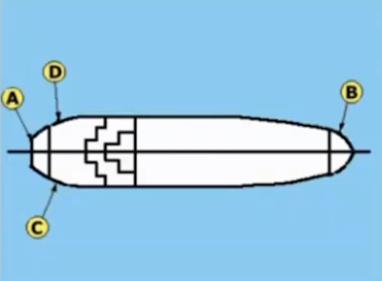
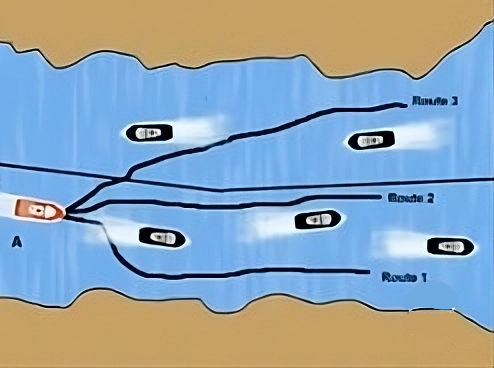
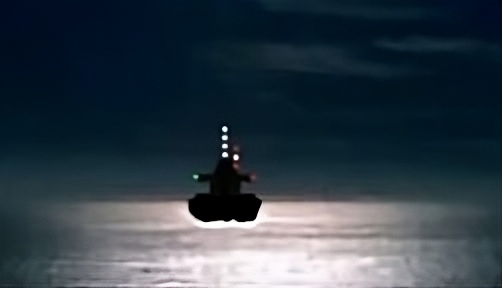
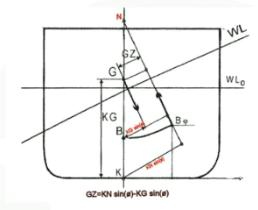
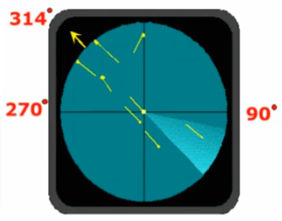

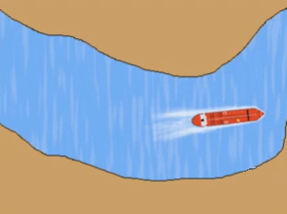
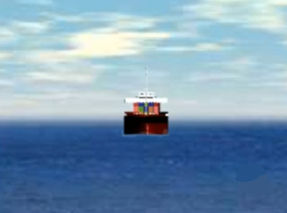
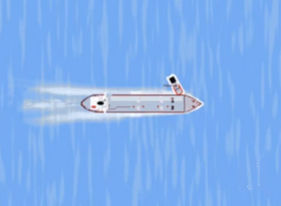
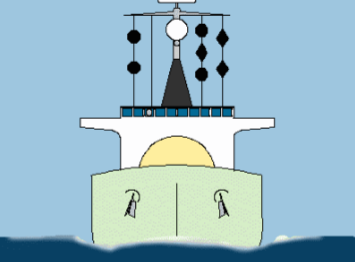
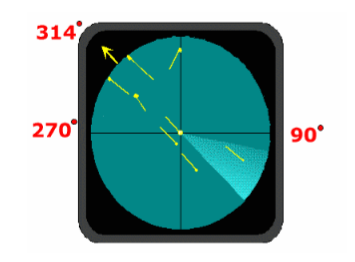
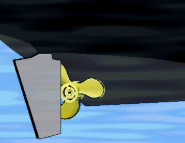


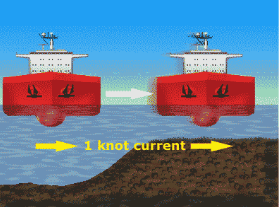
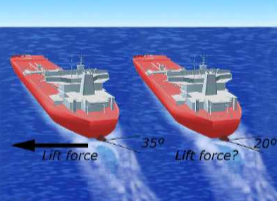



Добрый день. Что-то не так с тестом? Проходил экзаминационный пробный тест СЕS Контейнер/ managemant. 95% вопросов попались которые тут не встречаются, или попросту отсутствуют.