LNG Bunkering Guidance for Maritime Facility Management
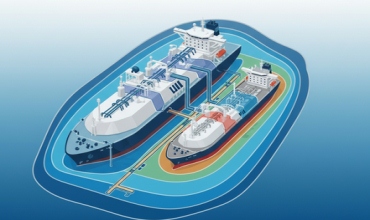
The execution of LNG Bunkering activities necessitates thorough preparation and oversight to guarantee navigational security and ecological safeguarding. These operational standards formulate complete procedures for LNG Bunkering system establishment, encompassing dedicated docking specifications, low-temperature conduit requirements and gas diffusion simulation prerequisites. Maritime administrators embracing such LNG Bunkering protocols should evaluate numerous engineering aspects like minimal hazard perimeters, crisis reaction readiness and adaptability with assorted ship categories. The structure underscores the significance of exhaustive danger evaluation techniques particularly designed for LNG Bunkering undertakings in harbor settings, merging measurable and qualitative assessment measures.
Workforce Training and Standardized Procedures for LNG Bunkering Operations
Proficient performance in LNG Bunkering requires expert workforce instruction initiatives encompassing sub-zero temperature management processes, combustible gas alert mechanism utilization and urgent stoppage guidelines. The manual specifies compulsory proficiency prerequisites for all personnel participating in LNG Bunkering undertakings, with special concentration on environmental consciousness during concurrent activities. Significant consideration is allocated to uniformization of LNG Bunkering processes throughout varying marine terminal layouts, guaranteeing functionality while preserving rigorous protection boundaries. The publication offers itemized engineering descriptions for LNG Bunkering apparatus, comprising loading booms, crisis disengagement mechanisms and fume retrieval components – all vital elements for secure energy transfer functions.
Strategic Planning and Implementation of LNG Bunkering Infrastructure
Long-range marine terminal growth strategies should integrate extended LNG Bunkering capability estimates to facilitate the shipping sector’s shift towards substitute energy sources. These directives present systematic approaches for performing exhaustive LNG Bunkering viability examinations, incorporating consumption predictions, system expansion assessments and cost-benefit computations. Harbor governing bodies applying such LNG Bunkering advisories shall be optimally situated to satisfy forthcoming compliance needs while sustaining productive functionality. The compilation culminates with practical examples illustrating effective LNG Bunkering deployment at multiple global seaports, emphasizing optimal methodologies and insights gained from actual implementation scenarios.