Welcome to the website where you can find answers for the CES test on the subject «Deck Management General Cargo Vessel». This site will help you as a marine specialist improve your knowledge with the help of open information, where you can find questions as well as answers for them. CES based on practical information and marine specialists experience.
CES tests developed for evaluating seaman basic knowledge by Seagull Company (rebranded as «OTG»), is an evaluating online-tool, used for revealing any professional preparation needed in specific fields of knowledge, defined by STCW.
Version: 5.0, 5.1, 6.0.0.
Test type: STCW.
Department: Deck.
Level: Management.
Vessel type: General Cargo Vessel.
CES tests have proven themselves as good tools for the selection and recruitment process, as well as advancing the level of knowledge of the current officers and crew. Ocean Technologies Group use various subjects for question creation, which includes:
Crowd and Crisis Management;
Integrated Navigation System (INS);
Ballast water management;
Handling and Stowage;
Vessel operation management and safety;
Marine engineering;
Maintenance and repair, etc.
Current test contains Seagull CES questions on the subject «Deck Management General Cargo Vessel». These questions can be used to test the competence of a person who is able, as a third officer on an oil tanker, to perform the basic duties of assisting senior officers in the safe navigation and operation of the vessel. It is also the responsibility of the ship’s worker to maintain accurate navigational records, conduct regular safety checks, and ensure that all applicable maritime regulations are observed.
«Deck Management General Cargo Vessel» subject includes theoretical and practical information about safety working with electrical equipment. Knowledge of this information directly indicates the competence of the employee who holds the relevant position on the ship. In addition, the officer is responsible for supervising the deck crew, supervising cargo operations, and conducting regular safety drills and drills. As a junior officer, you must learn from and support more senior crew members while gaining valuable experience that can be applied to future roles in the maritime industry.
This page contains answers to Seagull CES (Crew Evaluation System) test about Deck Management General Cargo Vessel, and serve as a database of questions and answers, using which seafarer can prepare to exams for getting certificate of competence, or just to challenge yourself with knowledge in this theme.
CES Deck Management General Cargo.pdf
Download
Use the search below to find question.
Amount of questions: 230.
Right answers marked with this sign .
Code: XIAY Where is the Safety Certificates for ships to be kept?
In the Captain’s office.
Posted up in a prominent place onboard the ship.
In the Captain’s safe.
In the Owner’s office.
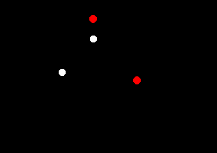
Code: GXYD According to Rule 26 of the International Regulations for Preventing Collisions and the illustrated lights, what type of vessels are they?
These are two vessels engaged in fishing (pair trawling), showing the additional volutary signals for hauling nets.
This is a vessel engaged in towing a disabled tow, restricted in its ability to manoeuvre, with a searchlight used to highlight the location of the tow.
These are two vessels engaged in fishing (using purse-seine gear). The searchlights are simply working lights.
These are two vessels engaged in fishing (pair trawling), showing the additional voluntary signals for shooting nets.
Code: ESCJ Who will have the authority to take charge and make appropriate decisions in the event of a vessel emergency when transiting the Panama Canal?
The ship’s company.
The ship’s Master.
The Panama Canal Authority.
The Master and Pilot will agree the best course of action to be taken to resolve the emergency situation.
Code: NRLY Which PPM is allowed for discharging of “Bilge Water” overboard?
15 PPM.
50 PPM.
100 PPM.
0 PPM.
Code: HNVI The portable walkie talkies required to be carried by GMDSS regulations should have which channels as a minimum?
Channels 6 & 16.
Channels 6, 13 & 16.
Channels 13 & 16.
Channel 16 only.
Code: RYMM Which of the following requirements regarding on board stability data corresponds to present regulations? (NSCL 4/12.1).
A calculation example showing the use of “KG” limitation curves.
Drawings and calculations documenting the stability of the ship, both in intact and all possible damage condition.
A calculation example showing use of “GM” limitation curves.
Stability data produced by stability calculation instruments.
Code: UNMM An Oil Record Book, Part 1, shall be provided to every ship of 400 tons gross tonnage and above to record machinery space operations. Out of below mentioned operations, it is compulsory to record:
Transfer of oil from settling – to daytank.
Discharge of water from Aft, Peak Tank.
Purification of HFO.
Bunkering of bulk lubricating oil.
Code: GFRW What possible reason could there be for the identification mark associated with a Racon not being visible on the radar screen?
The transmitted radar frequency may not trigger the Racon transmitter.
The racon may not be transmitting a pulse.
The radar may be suppressing the mark with application of the Interference Rejection control.
All of the suggested answers.
Code: SLHH What possible reason could there be for the identification mark associated with a Racon not being visible on the radar screen?
200 nm off US coast.
200 nm off coast of California.
Within 200 nm of US waters including Guam, Hawaii, Alaska and San Juan.
Within US waters.
Code: XIPW What is the priority for the ship’s management team when fire breaks out?
The ship’s management team must call the nearest fire brigade and police station.
The ship’s management team must organise the fire teams and then the teams have to rescue missing personnel.
The ship’s management team and the crew must evacuate the ship.
The ship’s management team must fight the fire and then call the fire teams.
Code: CIUL How often must inspection of proper working of the EPIRB’s and SART’s take place on board? Once per:
Week.
14 days.
Month.
I don’t know.
Code: YOYO A message is sent to a fax-machine. However the message cannot be delivered by the land earth station. The land earth station will:
Will only send a non-delivery notification (NDN) to the sender if so requested by him.
Automatically send a non-delivery notification (NDN) to the sender.
Never send a non-delivery notification (NDN) if a fax message to the sender. The sender to verify if the message was received.
I don’t know.
Code: OCSO The MF/HF-transceiver on board is tuned to the assigned frequency of a station. To make this connection the following mode is used:
J2B.
J3E.
H3E.
I don’t know.
Code: LEMO The DSC-controller display the following: DOO: 244562000 CH16; S distress sinking. After receiving this DSC message the following is done immediately:
Listen out on VHF channel 16.
Send a “distress alert relay”.
Give a “DSC-acknowledgement”.
Call the Chief officer.
Code: CPKJ By the degree of selectivity of a receiver is meant:
Ability to distinguish weak stations from adjacent stronger stations.
Ability to prevent variations in the strength of radio frequency signal received.
Ability to make weak stations audible.
I don’t know.
Code: XCFI What mode must be used on the MF/HF transmission, when transmitting a telex-message:
H3E.
F1B/J2B.
J3E.
I don’t know.
Code: XFOI At the entrance to the space where batteries are stored on board the following notice must be fitted:
Crew only.
Keep access free.
No entry with naked light and/or flame.
I don’t know.
Code: BCCE Which of the options best describes how a “Balanced Rudder” is constructed?
Part of the rudder area is forward of the turning axis, therefore reducing the load on the steering motor.
A rudder with equal rudder area forward and aft of the turning axis, the turning axis being at the geometrical centre of the rudder area.
A rudder which is operated by two steering motors providing equal amounts of thrust to the rudder.
A rudder with an additional flap attached the training edge to improve the rudder efficiency.
Code: VSWN Which of the following channels and modes should be used when initiating a distress alert transmission?
Channel 6 DSC.
Channel 13 Radiotelephony and channel 16 DSC.
Channel 6 Radiotelephony.
Channel 70 DSC.
Code: UETJ What is the action that a GMDSS Radio Operator should take when a DSC distress alert is received?
The Operator should immediately set continuous watch on the radiotelephone frequency that is associated with frequency band on which the distress alert was received.
The Operator should immediately set continuous watch on the NBDP frequency that is associated with frequency band on which the distress alert was received.
No action is necessary, as the DSC control will automatically switch to the NBDP follow-on communications frequency.
The Operator should immediately set continuous watch on VHF channel 70.
Code: MMGB Which of the following two digits codes is used to obtain maritime assistance?
39.
38.
37.
32.
Code: KSGK Which of the following two digits codes is used to obtain medical advice?
26.
32.
38.
42.
Code: HDOT Which of the following two digits codes is used to obtain medical assistance?
26.
32.
38.
42.
Code: JNTN Which of the following is the correct minimum carriage requirement for a ship of more than 300 gross tons and operating in area A1:
1 VHF RT + DSC + DSC watch receiver – 1 or 2 SART – 1 NAVTEX or 1 EGC receiver – 2 or 3 VHF portable – 1 EPIRB.
1 VHF RT – 1 or 2 SART – 1 NAVTEX or 1 EGC receiver – 2 or 3 VHF portable – 1 EPIRB.
1 VHF RT + DSC + DSC watch receiver – 1 or 2 SART – 1 NAVTEX or 1 EGC receiver – 2 or 3 VHF portable.
I don’t know.
Code: GHLS Which of the following is a ship MMSI?
1227200.
2275300.
22753000.
227530000.
Code: JHBM Messages sent via INMARSAT-C are charged:
On the number of kilobits of information transmitted per block of 256 bits.
On the basis of a three minute minimum charge with one minute incremental steps.
On the number of kilobits of information transmitted per block of 1 024 bits.
On the basis of a six second minimum charge with six second incremental steps.
Code: KWPJ When should a crew member joining a ship for the first time be given some training and instructions in the use of the ship’s fire-fighting appliances?
As soon as possible but not later than 2 weeks after he joins the ship.
As soon as possible but not later than 2 days after he joins the ship.
As soon as possible but not later than 24 hours after he joins the ship.
As soon as possible.
Code: VIRV The steps of the embarkation ladder used must be proportioned as it follows:
Length = 580 mm, breadth = 165 mm, depth = 30 mm.
Length = 480 mm, breadth = 115 mm, depth = 25 mm.
Length = 380 mm, breadth = 145 mm, depth = 20 mm.
Length = 280 mm, breadth = 85 mm, depth = 10 mm.
Code: PBTW The steps of the embarkation ladder used must be spaced apart by a distance of:
Equally spaced, not less than 300 mm or more than 380 mm.
Equally spaced, not less than 200 mm or more than 280 mm.
200 mm.
300 mm.
Code: PGII The operating mode of a pyrotechnic signal depends essentially on:
The fact that the user is on board a liferaft, a lifeboat or ship.
Instructions or diagrams printed on its casing by the manufacturer.
The weather conditions of the moment.
A definite standard process.
Code: KMWH What does ISM stand for?
The International Management Code for the Safe Operation of Ships and for Pollution Prevention.
International Safe Manning Certification.
Internal Ship Safety Management.
International Ship Measurement and Pollution Control.
Code: XLBJ What is the main theme of modern safety practice?
Use the same practice that has been in place for some time.
Health & Safety at Work Act.
Consult the chief officer before commencing work.
Making use of Risk Assessment as a means to improving safety.
Code: XPXH Which one of the following items has to be included in an abandon ship drill according to SOLAS regulations?
Checking that life-jackets are correctly donned.
Launching and recovery of a survival craft.
Manoeuvring the lifeboat in the water.
Starting and operating radio life-saving appliances.
Code: JHRL Which one of the listed items has to be included in a distress message?
Weather in immediate vincinity.
Identification of the ship.
Destination.
Last port of call.
Code: LFAP During helicopter evacuation of an injured man, what course should the ship steer?
As instructed by the helicopter pilot.
With the wind astern so that the effect of the wind is reduced as much as possible.
With the wind fine on the bow opposite to the helicopter operating area.
Directly into the wind.
Code: KQEI Your vessel is involved in a collision with another vessel. What should you as Master tell the Master on the other vessel?
There should be no communication with the other vessel.
Explain your actions prior to the collision and request details of actions taken by the other vessel which resulted in the collision.
Ask if there is any assistance required by the other vessel.
Name; Port of registry; Port of destination of your vessel.
Code: RBPN Which of following are security duties?
All alternatives.
Calibration of security equipment.
Checking ID of visitors onboard.
Monitoring of restricted areas.
Code: SVMW For a search to be effective it must be:
Conducted by personnel with limited knowledge of the ship’s layout.
Inclusive of all personnel.
Centrally controlled.
Organized haphazardly.
Code: XYBO If the speed of a vessel through the water is HALVED, how will this effect squat?
The squat effect will be reduced to a quarter of its original value.
There will be very little change to the effects of Squat.
There will be a significant change in the reduction of underkeel clearance, but the amount varies from ship to ship.
The squat effect will also be halved.
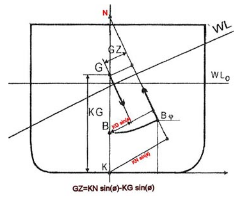
Code: FGDL The value of the GZ lever at small angles of heel on a General Cargo Vessel can be denoted by the formula:
KM – KG × Sin angle of heel.
KN – KG × Sin angle of list.
KM – Corrected KG × Sin angle of list.
KN – Corrected KG × Sin angle of heel.
Code: DVNH It is important for hatch coaming compression bars to be maintained in good order on a General Cargo Vessel so that:
So that hatch covers remain water tight.
So that water can drain out from the hatch coaming drains.
So that hatches can be properly sealed.
So that there is no steel contact between the hatch covers and hatch coaming.
Code: ENYM When using an echo sounder in fresh water, the sounding indicated has a small error, what is the cause of this?
The density of the water.
The strength of the tide and current in the river.
Shallow water effects.
There should be no error with a properly working echo sounder.
Code: SBRY Additional lashings on general cargoes must be considered when:
When passing through the Tropical Zone in winter months.
When heavy weather is anticipated for the planned voyage.
When passing through the Summer Zone in winter months.
With the onset of heavy weather.
Code: KMBN The main purpose of a hatch cover ventilator grill on a General Cargo vessel is:
To prevent sparks entering the cargo hold.
To act as a strength member inside the ventilation shaft.
To prevent moisture from entering the hold.
To prevent the ventilation fans from damage.
On a General Cargo vessel, a 16T derrick should be tested to a proof load of:
25T.
20T.
18T.
I don’t know.
Code: SVVX Prior to loading general cargo on a General Cargo vessel, with regard to lashing wires, terminations, shackles, turnbuckles, pad eyes and D rings etc., you must make sure that:
They must all be certified and be (visually) unimpaired.
Lashing wires must be new whereas other accessories may be certified.
They must all be visually inspected.
They must all be certified.
Code: LDVO On a General Cargo ship, the most likely cause of a hatch cover hydraulic system to deteriorate would be:
Due to hatch cover operations in high summer temperatures.
Due to repeated hatch cover operations.
Due to ice accretion on piston jackets.
Due to dust and cargo particles lodging around the piston seals.
Code: JLRE You are proceeding along a coastal route when you hear this signal. The visibility is severely restricted. What does the signal mean?
There is a vessel aground in the vicinity. She is more than 100 metres in length. She is sounding an additional warning to approaching vessels that they are “running into danger”.
There is a vessels aground in the vicinity. She is less than 100 metres in length. She is sounding an additional warning to approaching vessels to “navigate with extreme caution”.
There is a vessel at anchor in the vicinity. She is less than 100 metres in length. She is sounding an additional warning to approaching vessels that they are “running into danger”.
There is a vessel at anchor in the vicinity. She is less than 100 metres in length. She is sounding an additional warning to approaching vessels that they are “keep clear”.
Code: RGKG What is the world-wide system operated by the US Coast Guard exclusively in support of search and rescue operations?
The Automated Mutual-Assistance Vessel Rescue (AMVER) System.
The International Search and Rescue Coordination System.
The US Command and Control Rescue (USCOMR) Service.
The Worldwide Maritime Mutual Assistance Programme (WMMAP).
Code: PHEK What type of search pattern is recommended in the IAMSAR Manual as most effective for a single vessel, when the location of the search object is known within relatively close limits?
Track Line Search.
Sector Search.
Expanding Square Search.
Parallel Sweep Search.
Code: XJJP For security purposes, the IMDG Code should be read in conjunction with the:
Chapter XI-2 of SOLAS and Part A of the ISPS Code.
Chapter V of SOLAS and Annex II of MARPOL.
Part B of the ISPS Code and Chapter II of the Maritime Transport and Offshore Facilities Act.
IMO NVIC 24 and 46 CFR 2.05.
Code: EHJGDG placards shall be located on a freight container:
One on each end and one on each side.
One on each side (only).
One of the back end and one on one of the sides (only).
One on each end (only).
Code: KWAP When conducting a risk assessment for a shipboard work activity, the two elements to be considered are:
The time available to complete the task and the resources to hand.
The potential severity of harm and the likelihood that harm will occur.
The available manpower and their experience in this type of work.
The chance of an incident re-occuring and the potential effects of an loss.
Code: KREQ If for some reason a vessel does not comply with a Classification Society’s requirements, what can a surveyor issue to the vessel enabling it to sail to the next port or for a period of time?
A Notification of Deficiency.
A revised Class Notation.
A Condition of Class.
A Notification of Detention.
If W = Displacement, L = length, B = Breadth, D = depth of vessel, Cb = Block Coefficient, Cw = Coefficient of Waterplane, RD = Relative Density, then:
W = L × B × D × CB.
W = L × B × D × CW.
W = L × B × D × RD.
W = L × B × D × CB / RD.
Code: ICRF The majority of convensions adopted under the auspices of IMO fall into which of the three main categories:
Maritime Safety, Prevention of Marine pollution, Liability and compensation.
Maritime Safety, STCW, Maritime Security.
Safety, Terrorism, ILO.
There are no conentions that fall under IMO.
Code: TJVU To maintain good relationship among the crew on board a vessel, one must be:
Understanding, Co-operative, and have respect from both sides.
Strict and authoritative while giving orders.
Give authority to others.
Polite and diplomatic while talking to crew members.
Code: DCCQ What type of dynamic forces may cause indent in plating on forecastle deck and main deck in way of pillars inside forecastle?
Forces created by waves on the forecastle.
Pressure forces caused by green water on deck.
Slamming in way of flat bottom forward of light draught.
Impact pressure forces in way of abrupt or flared bow.
Code: LFVT Steel coils when loaded on a General Cargo ship tend to be subjected to:
Tearing.
Bending.
Crushing and distortion.
Chemical reactions between the steel banding and outer envelope.
Code: YRDV Which of the following cargoes can normally be loaded next to each other in the same space of a General Cargo vessel?
Drums of cement and steel pipes.
Drums of cement and bagged milk powder.
Pallets of pesticides and bagged grain.
Rolls new carpets and drums lubricating oils.
Code: MWSD A General Cargo vessel has a 50 tonne SWL heavy lift derrick and a load of 48 tonnes is to be loaded. The lifting gear of slings and spreader bar weighs 4 tonnes. In this case, it would be correct to state that:
The load cannot be loaded because the combined weight of the load and the lifting gear must at least 10 % less than the SWL of the derrick.
The load can be loaded because the load itself is less than the SWL of the derrick.
The load can be loaded because the SWL can sometimes be exceeded by small amounts in cargo operations.
The load cannot be loaded because the combined weight of the load and the lifting gear will exceed the SWL by two tonnes.
Code: RJQB A general cargo with a large metacentric height (GM) would be expected to have:
A fast roll period and small righting levers (GZ Levers).
A fast roll period and large righting levers (GZ Levers).
A long roll period and large righting levers.
A long roll period and small righting levers (GZ Levers).
Code: TCiJayZ0 Where is the Safety Certificates for ships to be kept?
In the Captain’s office.
In the Captain’s safe.
In the Owner’s office.
I don’t know.
Code: 5b$$Mm2m Who will have the authority to take charge and make appropriate decisions in the event of a vessel emergency when transiting the Panama Canal?
The Panama Canal Authority.
The ship’s company.
The ship’s Master.
I don’t know.
Code: l8TbAB9S Which PPM is allowed for discharging of “Bilge Water” overboard?
15 PPM.
100 PPM.
0 PPM.
50 PPM.
Code: iRsgtxWr The portable walkie talkies required to be carried by GMDSS regulations should have which channels as a minimum?
Channels 6, 13 & 16.
Channel 16 only.
Channels 13 & 16.
Channels 6 & 16.
Code: FxxF16bA Which of the following following requirements regarding on board stability data corresponds to pres present regulations? NSCL (4/12.1).
A calculation example showing the use of “KG” limitation curves.
A calculation example showing use of “GM” limitation curves.
Drawings and calculations documenting the stability of the ship, both in intact and all possible damage condition.
I don’t know.
Code: kPPJHUzR An Oil Record Book, Part 1, shall be provided to every ship of 400 tons gross tonnage and above to record machinery space operations.Out of below mentioned operations, it is compulsory to record:
Bunkering of bulk lubricating oil.
Purification of HFO.
Discharge of water from Aft, Peak Tank.
Transfer of oil from settling – to daytank.
Code: ELV#HLRO What possible reason could there be for the identification mark associated with a Racon not being visible on the radar screen?
All of the suggested answers.
The radar may be suppressing the mark with application of the Interference Rejection Control.
The racon may not be transmitting a pulse.
The transmitted radar frequency may not trigger the Racon transmitter.
Code: PDDOSA8Y Where is OPA-90 applicable?
Within 200 nm of US waters including Guam, Hawaii, Alaska and San Juan.
200 nm off US coast.
200 nm off coast of California.
Within US waters.
Code: 08LybTc2 What is the priority for the ship’s management team when fire breaks out?
The ship’s management team must organise the fire teams and then the teams have to rescue missing personnel.
The ship’s management team must call the nearest fire brigade and police station.
The ship’s management team and the crew must evacuate the ship.
The ship’s management team must fight the fire and then call the fire teams.
Code: lAArGBLP How often must inspection of proper working of the EPIRB’s and SART’s take place on board? Once per:
Month.
14 days.
Week.
I don’t know.
Code: GM85OKr5 A message is sent to a fax-machine. However the message cannot be delivered by the land earth station. The land earth station will:
Automatically send a non-delivery notification (NDN) to the sender.
Never send a non-delivery notification (NDN) if a fax machine to the sender. The sender to verify if the message was received.
Will only send a non-delivery notification (NDN) to the sender if so requested by him.
I don’t know.
Code: SQP00cZm The MF/HF-transceiver on board is tuned to the assigned frequency of a station. To make this connection on the following mode is is used:
J3E.
H3E.
J3B.
I don’t know.
Code: Ou4elVxi By the degree of selectivity of a receiver is meant:
Ability to make weak stations audible.
Ability to distinguish weak stations from adjacent stronger stations.
Ability to prevent variations in the strength of radio frequency signal received.
I don’t know.
Code: SnlI0$cq What mode must be used on the MF/HF transmission, when transmitting a telex-message:
F1B/J2B.
H3E.
J3E.
I don’t know.
Code: l3irPc8h At the entrance to the space where batteries are stored on board the following notice must be fitted:
No entry with naked light and/or flame.
Crew only.
Keep access free.
I don’t know.
Code: hybu6vSp Which of the options best describes how a “Balanced Rudder” is constructed?
Part of the rudder area is forward of the turning axis, therefore reducing the load on the steering motor.
Equal rudder area forward and aft of the turning axis, the turning axis being at the geometrical centre of the rudder area.
Operated by two steering motors providing equal amounts of thrust to the rudder.
I don’t know.
Code: aIxdYAD$ Which of the following channels and modes should be used when initiating a distress alert transmission?
Channel 70 DSC.
Channel 6 DSC.
Channel 13 Radiotelephony, channel 16 DSC.
I don’t know.
Code: 7z2J1Plo What is the action that a GMDSS Radio Operator should take when a DSC distress alert is received?
The Operator should immediately set continuous watch on the radiotelephone frequency that is associated with frequency band on which the distress alert was received.
No action is necessary, as the DSC control will automatically switch to the NBDP follow-on communications frequency.
The Operator should immediately set continuous watch on VHF channel 70.
I don’t know.
Code: 2dt6HBun Which of the following two digits codes is used to obtain maritime assistance?
39.
37.
38.
32.
Code: V7aqdhkz Which of the following is the correct minimum carriage requirement for a ship of more than 300 gross tons and operating in area A1:
1 VHF RT + DSC+ DSC watch receiver – 1 or 2 SART – 1 NAVTEX or 1 EGC receiver– 2 or 3 VHF portable – 1 EPIRB.
1 VHF RT + DSC + DSC watch receiver – 1 NAVTEX or 1 EGC reveiver – 2 or 3 VHF portable – 1 EPIRB – 1 MF RT + DSC + DSC watch reveiver – 1 INMARSAT A, B or C and 1 HF RT + DSC + DSC watch reveiver.
Code: Mw#JTnYl Which of the following is a ship MMSI?
227530000.
1227200.
2275300.
22753000
Code: FWawT4s4 Messages sent via INMARSAT-C are charged:
On the number of kilobits of information transmitted per block of 256 bits.
On the basis of a 6 second minimum charge with 6 second incremental steps.
On the number of kilobits of information transmitted per block of 1 024 bits.
I don’t know.
Code: XnWUE4Z# When should a crew member joining a ship for the first time be given some training and instructions in the use of the ship’s fire-fighting appliances?
As soon as possible but not later than 2 weeks after he joins the ship.
As soon as possible.
As soon as possible but not later than 24 hours after he joins the ship.
I don’t know.
Code: GTsmcNre The steps of the embarkation ladder used use d must be proportioned as it follows:
Length = 480 mm, breadth = 115 mm, depth = 25 mm.
Length = 280 mm, breadth = 85 mm, depth = 10 mm.
Length = 580 mm, breadth = 165 mm, depth = 30 mm.
Length = 380 mm, breadth = 145 mm depth = 20 mm.
Code: lJVMk#XF The operating mode of a pyrotechnic signal depends essentially on:
Instructions or diagrams printed on its casing by the manufacturer.
The fact that the user is on board a liferaft, a lifeboat or ship.
The weather conditions of the moment.
A definite standard process.
Code: G5npiSwg What does ISM stand for?
The International Management Code for the Safe Operation of Ships and for Pollution Prevention.
International Safe Manning Certification.
Internal Ship Safety Management.
International Ship Measurement and Pollution Control.
Code: dN5FDX3A What is the main theme of modern safety practice?
Making use of Risk Assessment as a means to improving safety.
Consult the chief officer before commencing work.
Health & Safety at Work Act.
Use the same practice that has been in place for some time.
Code: VkRVvzdm Which one of the following items has to be included in an abandon ship drill according to SOLAS regulations?
Checking that life-jackets are correctly donned.
Launching and recovery of a survival craft.
Manoeuvring the lifeboat in the water.
I don’t know.
Code: iMzNBIqS Which one of the listed items has to be included in a distress message?
Identification of the ship.
Last port of call.
Weather in immediate vincinity.
Destination.
Code: Btg2XJuE During helicopter evacuation of an injured man, what course should the ship steer?
As instructed by the helicopter pilot.
Directly into the wind.
With the wind ifne on the bow opposite to the helicopter operating area.
With the wind astern so that the effect of the wind is reduced as much as possible.
Code: 7lHYzjPJ Which of following are security duties?
All alternatives.
Calibration of security equipment.
Checking ID of visitors onboard.
I don’t know.
Code: 8eQuBMXK For a search to be effective it must be:
Centrally controlled.
Inclusive of all personnel.
Conducted by personnel with limited knowledge of the ship’s layout.
I don’t know.
Code: cX6l1qyx If the speed of a vessel through the water is HALVED, how will this effect squat?
The squat effect will be reduced to approximately a quarter of its original value.
The squat effect will also be halved.
There will be very little change to the effects of squat.
I don’t know.
Code: PY7Ge2Mh The value of the GZ lever at small angles of heel on a General Cargo Vessel can be denoted by the formula:
KM – KG × Sin angle of heel.
KM – Corrected KG × Sin angle of heel.
KN – Corrected KG × Sin angle of list.
I don’t know.
Code: 2fYAWap7 It is important for hatch coaming compression bars to be maintained in good order on a General Cargo Vessel so that:
Hatches can be properly sealed.
Hatch covers remain water tight.
Water can drain out from the hatch coaming drains.
I don’t know.
Code: 90oXxPvi When using an echo sounder in fresh water, the sounding indicated has as a small error, what is the cause of this?
The density of the water.
Shallow water effects.
There should be no error with a properly working echo sounder.
I don’t know.
Code: dF9a0xTf Additional lashings on general cargoes must be considered when:
The density of the water.
Passing trough the Tropical Zone in winter months.
Passing through the Summer Zone in winter months.
I don’t know.
Code: gjYcMvOl The most important consideration when planning the lashing system for a particular sea route on a General Cargo Vessel is:
Transverse accelerations.
The quantity and type of lashing materials.
The size and weight of packages/cargo units to be loaded.
I don’t know.
Code: dw3QwZUv The main purpose of a hatch cover ventilator grill on a General Cargo vessel is:
To prevent sparks entering the cargo hold.
To act as a strength member inside the ventilation shaft.
To prevent moisture from entering the hold.
I don’t know.
Code: UW2Hq39c On a General Cargo vessel, a 16T derrick should be tested to a proof load of:
20T.
32T.
16T.
I don’t know.
Code: hGwU0jEF Prior to loading general cargo on a General Cargo vessel, with regard to lashing wires, terminations, shackles, turnbuckles, pad eyes and D rings etc., you must make sure that:
They must all be certified and be visually inspected for any apparent damage.
They must all be visually inspected.
They must all be certified.
I don’t know.
Code: fLqTgnlZ What is the world-wide system operated by the US Coast Guard exclusively in support of search and rescue operations?
The Automated Mutual-Assistance Vessel Rescue (AMVER) System.
The Worldwide Mutual Assistance Programme (WMMAP).
The US Command and Control Rescue (USCOMR) Service.
I don’t know.
Code: UMP9zJvO What type of search pattern is recommended in the IAMSAR Manual as most effective for a single vessel, when the location of the search object is known within relatively close limits?
Expanding Square Search.
Parallel Sweep Search.
Sector Search.
I don’t know.
Code: $kixuSLy For security purposes, the IMDG Code should be read in conjunction with the:
Chapter XI-2 of SOLAS and Part A of the ISPS Code.
IMO NVIC 24 and 46 CFR 2.05.
Part B of the ISPS Code and Chapter II of the Maritime Transport and Offshore Facilities Act.
I don’t know.
Code: b7baQmbY When conducting a risk assessment for a shipboard work activity, the two elements to be considered are:
The potential severity of harm and the likelihood that harm will occur.
The chance of an incident re-occuring and the potential effects of an loss.
The available manpower and their experience in this type of work.
I don’t know.
Code: 7JXnSZcZ If for some reason a vessel does not issue comply with vessel a Classification requirements, what can a surveyor to the enabling it Society’s to sail to the next port or for a period of time?
A Condition of Class.
A Notification of Deficiency.
A revised Class Notation.
I don’t know.
Code: MKGR9eJI The majority of convensions adopted under the auspices of IMO fall into which of the three main categories:
Maritime Safety, Safety, Prevention of Marine pollution, Liability and compensation.
Safety, Terrorism.
There are no connections that fall under IMO.
I don’t know.
Code: FgEHYn7E To maintain good relationship among the crew on board a vessel, one must be:
Understanding, Co-operative, and have respect from both sides.
Polite and diplomatic talking to crew members.
Give authority to others.
I don’t know.
Code: Gt9e4NMh What type of dynamic forces may cause indent in plating on forecastle deck and main deck in way of pillars inside forecastle?
Pressure forces caused by green water on deck.
Forces created by waves on the forecastle.
Slamming in way of flat bottom forward of light draught.
I don’t know.
Code: ahpiRHx3 Steel coils when loaded on a General Cargo ship tend to be subjected to:
Crushing and distortion.
Chemical reactions between the steel banding and outer envelope.
Bending.
I don’t know.
Code: iDosR$MG Which of the following cargoes can normally be loaded next to each other in the same space of a General Cargo vessel?
Drums of cement and steel pipes.
Drums of cement and bagged milk powder.
Pallets of pesticides and bagged grain.
I don’t know.
Code: iyeXOqPP A General Cargo vessel has a 50 tonne SWL heavy lift derrick and a load of 48 tonnes is to be loaded. The lifting gear of slings and spreader bar weighs 4 tonnes. In this case, it would be correct to state that:
The load cannot be loaded because the combined weight of the load and the lifting gear will exceed the SWL by two tonnes.
The load cannot be loaded because the combined weight of the load and the lifting gear must at least 10 % less than the SWL of the derrick.
The load can be loaded because the load itself is less than the SWL of the derrick.
I don’t know.
Code: kVNrZvcW A general cargo with a large metacentric height (GM) would be expected to have:
A fast roll period and large righting levers (GZ Levers).
A fast roll period and small righting levers (GZ Levers).
A long roll period and large righting levers.
I don’t know.
On a voyage from hot to cold climate countries, the ventilation of cargo holds of a General cargo ship should:
Be carried out continuously during the voyage.
Be carried out during the night time only.
Be carried out only when loading or unloading.
Be avoided to prevent temperature fluctuations.
An Oil Record Book, Part 1, shall be provided to every ship of 400 tons gross tonnage and above to record machinery space operations. Out of below mentioned operations, it is compulsory to record:
Bunkering of bulk lubricating oil.
Discharge of water from Aft, Peak Tank.
Discharge of oily bilge water.
Transfer of fuel oil between tanks.
In relation to OPA 90, Which of the following statements is correct?
COTP-zones may have additional rules and regulations.
After implementation of OPA-90 there are no area specific rules and regulations.
OPA-90 applies only to oil tankers.
All vessels are exempt from OPA-90 regulations.
How often shall crew members participate in fire drills?
Once every month.
Once every week.
Once every three months.
Once every six months.
On board they want to send a safety-call to other vessels. The DSC safety-call:
Has to contain a work-frequency.
May contain a work-frequency.
Should not contain any frequencies.
Can only be sent during emergencies.
A SART is used by a vessel in distress. This SART is seen on the screen of a:
3 Cm radar.
10 Cm radar.
12 Cm radar.
5 Cm radar.
The capacity of a battery is expressed in:
Ampere x hours.
Volt x hours.
Watt x hours.
Joule x hours.
For how long time should a COSPAS-SARSAT EPIRB be able to operate on its batteries?
96 hours.
24 hours.
48 hours.
72 hours.
A hand flare must have a burning period of at least:
1 Min.
5 Min.
3 Min.
10 Min.
Which statement about the use of profiling onboard a ship is true?
Detection equipment can be used in place of profiling.
A random selection process must be established.
Profiling is not necessary for safety procedures.
Profiling should only be done by senior officers.
When loading heavy lift cargoes on a general cargo vessel, positive stability can be maintained by:
Listing the vessel to the opposite side to which the load is being lifted.
Completely filling the ship’s double bottom tanks and continuously monitoring the loading operation.
Reducing the speed of the vessel during loading.
Using ballast water to counteract the weight of the cargo.
For special category spaces on board general cargo ship, the minimum required air changes per hour should be:
6.
8.
10.
12.
Information on the forces that may cause cargo shifting on a general cargo vessel may be available by referring to:
The Cargo Securing Manual (CSM).
The International Maritime Solid Bulk Cargoes Code (IMSBC).
The Safety Management System (SMS) Manual.
The Cargo Stowage and Security (CSS) Code.
For security purposes, the IMDG Code should be read in conjunction with the:
Chapter XI-2 of SOLAS and Part A of the ISPS Code.
Chapter V of SOLAS and Annex II of MARPOL.
International Safety Management (ISM) Code.
The Maritime Labour Convention (MLC).
As per the IMDG Code, “Marine Pollutant” is defined as:
A substance which is subject to the provisions of Annex III of MARPOL.
A substance which, because of its tendency to degrade in seafood, or because of its hazard potential to the aquatic environment is subject to the provisions of Annex I of MARPOL, as amended, and carried by sea accordingly.
A substance that is not harmful to the marine environment.
A substance that can be safely transported without any special precautions.
What type of dynamic forces may cause indent in plating on forecastle deck and main deck in way of pillars inside forecastle?
Pressure forces caused by green water on deck.
Forces created by waves on the forecastle.
Wind forces acting on the superstructure.
Vibrational forces from machinery operations.
Which of the following cargoes can normally be loaded next to each other in the same space of a General Cargo vessel?
Drums of cement and steel pipes.
Pallets of pesticides and bagged grain.
Containers of food products and chemicals.
Wooden crates and metal drums.
IMO recommendations on allowance for water absorption in timber deck cargoes on a General Cargo Vessel state that:
15 % additional weight should be used in stability calculation for the arrival condition.
5 % additional weight should be used in stability calculation for the arrival condition.
10 % additional weight should be used in stability calculation for the arrival condition.
20 % additional weight should be used in stability calculation for the arrival condition.
For a General Cargo ship to load Dangerous Goods in packaged form, it must have on board a:
Document of Compliance for carriage of dangerous goods.
Safety Construction Certificate for carriage of IMDG cargoes in packaged form.
Certificate of Competency for handling dangerous goods.
Cargo Securing Manual for dangerous goods.
Once the Safety Management System is verified and working effectively, what document is issued to the ship?
The Safety Management Certificate.
The ISM Certificate.
The Safety Operations Manual.
The Certificate of Compliance.
What does the abbreviation SOLAS mean?
Safety Operations and Life Assurance Standards.
Safety of Life at Sea Regulations.
International Convention for the Safety of Lives at Sea.
Where is the Safety Certificates for ships to be kept?
In the Captain’s office.
In the engine room for easy access.
In the crew mess for all crew members to review.
If the wind speed on a vessel doubles, by approximately how much will the force from it rise?
The force will be doubled.
The force will be tripled.
The force will be Quadrupled.
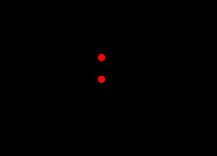
According to the International Regulations for Preventing Collisions and the illustrated lights, what type of vessel is this and from what direction is it viewed?
This is a vessel engaged in fishing other than trawling, making way through the water, with outlying gear extending more than 150 m in the direction of the all-round white light.
This is a sailing vessel under power, viewed from the starboard side.
This is a vessel at anchor, viewed from the stern.
Looking at its port side.
According to the International Regulations for Preventing Collisions and the illustrated lights, what type of vessel is this?
This vessel is not under command and is not making way through the water.
This vessel is engaged in fishing and is making way through the water.
This vessel is at anchor and not under command.
The ship is approaching shallow water where the Under Keel Clearance will reduce to about 0,25 of the ship’s draught. Which of the following answers most accurately summarizes the aspects to be considered when deciding a suitable speed?
The effects of squat and the vessel’s response to the shallow water.
The weather conditions and potential for wind and current effects.
The ship’s stability and handling characteristics in shallow water.
All of the suggested answers.
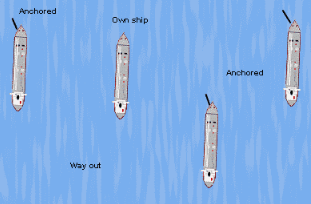
‘Own-ship‘ is to leave a crowded anchorage heading in the ‘way out‘ direction as illustrated. The ship has a right-handed propeller and conventional rudder. What would be the safest manoeuvre?
Back out dead slow then full astern, transverse thrust should cant the bow to starboard. If the ship steers astern use port rudder.
Back out at full speed and turn hard to starboard.
Leave the anchorage without any manoeuvring.
Reverse the ship while maintaining a straight course.
When a pilot is in attendance for navigation in a compulsory pilotage area, should the Master discuss the vessel’s passage plan with them?
No – the pilot will handle everything without input from the Master.
Only if the pilot asks for it.
Yes, but only after the vessel has left the port.
Yes – this is very much part of the Master/Pilot information exchange.
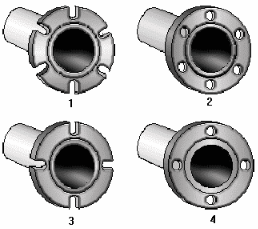
Which of the connections you are shown, are the dedicated shore connection (MARPOL-connection) for discharging of sewage?
Connection 1 – General cargo discharge connection.
Connection 2 – Fuel oil discharge connection.
Connection 3 – Ballast water discharge connection.
Connection 4 – Dedicated shore connection (MARPOL-connection) for discharging of sewage.
Which of the following would be considered pollution, when discharged overboard, under the US water pollution laws?
Oil and oily mixtures.
Sewage and sewage sludge.
All of the mentioned.
Hazardous substances.
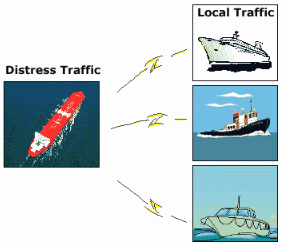
Your vessel is not in distress and not taking part in a distress operation. How would you impose radio silence on vessels which are interfering with the distress traffic?
Use the phrase “Seelonce Mayday“.
Send a warning message to all vessels in the area.
Use the phrase “Seelonce Distress“.
Broadcast on all channels to clear the air.
On a voyage from cold to hot climate countries, the ventilation of cargo holds of a General cargo ship should:
Be carried out continuously to maintain temperature.
Not be carried out at all.
Be done only during the night when temperatures are lower.
Be limited to short intervals to avoid temperature shock.
How often are “abandon ship” drills required to be held on cargo vessels according to SOLAS?
Once every three months.
Once every six months.
Once every month.
Once a year.
Which of the following requirements regarding on board stability data corresponds to present regulations? (NSCL 4/12.1)
A stability booklet containing only theoretical data.
A calculation example showing the use of “KG” limitation curves.
A summary of stability data without calculations.
A list of stability criteria without practical examples.
Your vessel has been involved in a minor collision. What will your actions be following the collision?
Assess the damage to your vessel and the other vessel involved.
Notify the relevant authorities about the incident.
All of the answers are correct.
Provide assistance to the other vessel if necessary.
What is the probable cause of an error in the position shown on a GPS receiver set into ‘2D‘ fixing?
Poor satellite signal due to obstructions.
Incorrect height of the antenna set into the receiver.
Software malfunction in the GPS unit.
Outdated GPS firmware.
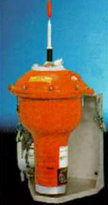
The compulsory testing of a prescribed EPIRB is to be done:
Once every three months.
Once every six months.
Once a month.
Once a year.
For calling a coast-station by VHF one should preferably use:
Any available channel.
A distress channel.
A channel designated for emergency communications.
A working channel of the nearest shore-station of that coast-station.
Inmarsat Telex Service code ‘33’ can be used:
To send distress messages.
For general communication with other vessels.
When technical problems are experienced with the Inmarsat-terminal.
To request weather information.
The log-in of an Inmarsat-C installation is important:
To inform the NCS that one is available for messages offered.
To update the software of the terminal.
To ensure the terminal is functioning properly.
To check the satellite’s position.
On board an accident happened. Urgent radio-medical advice is needed. We choose the category:
Distress.
Safety.
Urgency.
Routine.
When may a call for radio medical advice be preceded by the urgency-signal?
In routine cases.
In non-urgent cases.
In urgent cases.
In all cases.
The safety message announces that a station:
Will provide general information about the area.
Will relay a message concerning an important navigational or meteorological warning.
Will offer assistance to vessels in distress.
Will announce routine traffic updates.
The good operation in any location, whether the NAVTEX is working properly or not, can be checked using:
A testing program built in for this purpose.
A manual inspection of the device.
A random check of the signal strength.
A software update to the system.
The whip-antenna of the MF transceiver was lost in bad weather. The MF-transceiver can be used again:
If the transceiver is reset to factory settings.
If a longer antenna is used to improve reception.
If the whip-antenna is replaced by an antenna of about the same length as the original one.
If the transceiver is connected to a power source.
How many total frequencies are available for DSC distress alerting?
Five (5).
Seven (7).
Ten (10).
Twelve (12).
At what minimum height above sea level must a SART transponder be mounted?
1 metre.
2 metres.
3 metres.
5 metres.
Messages sent via INMARSAT C are charged:
Based on the total duration of the message.
Per message sent, regardless of size.
On the number of kilobits of information transmitted per block of 256 bits.
On the number of characters in the message.
The normal mode of operation for each coast station shall be indicated in:
The ITU List of Coast Station.
The Maritime Safety Information Manual.
The National Frequency Allocation Table.
The Global Maritime Distress and Safety System Guide.
In what language/languages must the fire control plans or booklets (or copies of these) be written?
Only in English.
In the local language of the port.
In any language as long as it is understandable.
In the Flag State official language with copies in English or French.
How many Radar Transponders (SART) are required to be carried onboard a ship for use in survival crafts?
One on each side of the ship.
One for every ten crew members.
Two, one for each survival craft.
Only one is required regardless of the size of the ship.
Give the meaning of the following symbol:
Emergency beacon.
Radar transponder.
Navigation light.
Communication device.
What is most important for crew members when preparing for emergencies?
That people are well trained.
That emergency equipment is easily accessible.
That there is a clear communication plan.
That all crew members are familiar with the ship’s layout.
Which one of the listed requirements regarding abandon ship drills corresponds to present SOLAS regulation?
All crew members must participate in the drill every month.
Lifeboats must be inspected weekly for readiness.
Each lifeboat shall be launched, and maneuvered in the water with its assigned crew at least once every three months during an abandon ship drill.
Drills must be conducted only during safety training sessions.
If a DSC distress alert is received on board your ship, what is the first action that should be taken?
Check the ship’s position and status.
Inform the captain immediately.
Listen for a distress message on the appropriate radio frequency for five minutes.
Activate the ship’s emergency response plan.
With respect to the ISM, what training in addition to lifeboat and fire drills must be carried out?
Regular safety meetings and briefings.
Familiarization, and other drills identified as necessary by the ship.
Emergency evacuation procedures only.
Only drills related to equipment maintenance.
Every inflatable liferaft, inflatable lifejacket and hydrostatic release units shall be serviced:
Every 6 months.
Every 18 months.
Every 12 months.
Only when required by the manufacturer.
During test and/or maintenance work of the CO2 system affecting the release system, precautions to ensure that the gas is not released into the engine room due to a mistake are to be ensured. What precautions should be taken?
The main supply line to be blanked off prior to the work.
The engine room doors should be closed.
All crew members must be evacuated from the engine room.
The CO2 system should be tested after maintenance.
Your vessel has been involved in a collision and has developed a list. After sounding the general alarm and informing others of the situation, what other immediate steps should be taken?
Assess the damage and check for water ingress.
Prepare lifeboats and life rafts for possible evacuation.
All of the options.
Communicate with nearby vessels for assistance.
Which of these precautionary measures can reduce the threat of piracy, if implemented?
Use a secure communication system.
Sail at full speed.
Maintain a low profile and avoid detection.
Anchor in isolated areas.
Which of these actions should you take if your ship is successfully boarded by armed pirates?
Attempt to negotiate with the pirates.
Try to escape to a safe area.
Assure your captors that you’re not planning an attack to overthrow them.
Fight back if possible.
On General Cargo ships, cargoes such as logs, fish meal, scrap metal and bales of cotton commonly tend to cause:
Cargo shifting during transit.
Increased humidity in the holds.
Oxygen depletion in the cargo holds.
Damage to the ship’s structure.
The carriage of bagged Ammonium Nitrate in cargo holds of a General Cargo vessel is associated with:
Risk of contamination with other cargo.
Risk of explosion.
Increased weight on the vessel.
Risk of moisture damage.
When loading heavy lift cargoes on a general cargo vessel, positive stability can be maintained by:
Distributing the weight evenly across the deck.
Using ballast water to adjust the center of gravity.
Completely filling the ship’s double bottom tanks and continuously monitoring the loading operation.
Reducing the speed of the vessel during loading.
It is important for hatch coaming compression bars to be maintained in good order on a General Cargo Vessel so that:
Hatches can be properly sealed.
The vessel can maintain its stability.
Cargo can be loaded and unloaded efficiently.
The vessel can comply with safety regulations.
What immediate action should be taken if a ship unexpectedly runs aground and stops?
Assess the damage to the hull.
Stop engine(s).
Notify the coast guard.
Attempt to reverse the ship.
When using an echo sounder in fresh water, the sounding indicated has a small error, what is the cause of this?
The temperature of the water.
The speed of the vessel.
The calibration of the echo sounder.
The density of the water.
Additional lashings on general cargoes must be considered when:
The cargo is not evenly distributed.
The cargo is of a fragile nature.
Heavy weather is anticipated for the planned voyage.
The vessel is operating in a busy port.
On a General Cargo vessel, a 16 T derrick should be tested to a proof load of:
15 T.
18 T.
20 T.
22 T.
If a master initially responds to a distress but then, in special circumstances, decides not to proceed, who must they tell?
Inform the nearest coastal authority.
Inform the Search and Rescue Mission Coordinator (SMC) of their decision and enter the reason in the vessel’s logbook.
Inform the crew members on board.
Inform the ship’s owner.
Under most circumstances, how will communication be carried out between a ship and a SAR helicopter?
By using satellite communication.
On UHF radio frequencies.
On HF radio frequencies.
On VHF Ch 16.
As per IMDG Code, the main criteria for drawing up classes for safe handling of hazardous substances is on the basis of:
The quantity of the substance.
The type of hazard they present.
The physical state of the substance.
The temperature at which they are stored.
One particular group of hazardous goods that is highlighted by the IMDG Code as potentially being the most dangerous for carriage is:
Flammable liquids.
Toxic substances.
Organic peroxides.
Corrosive materials.
During the survey of Long Range Identification and Tracking (LRIT) equipment, which document must be available to the surveyor to demonstrate compliance with SOLAS?
A certificate of installation issued by the manufacturer.
A report giving the result of the Conformance Test issued by an Application Service Provider on behalf of an Administration.
A maintenance log for the LRIT equipment.
A user manual for the LRIT system.
Under what convention is the master to ensure that a ship is seaworthy and in a fit state to safely carry a shipper’s cargo?
The Hague-Visby Rules.
The Hamburg Rules.
The Rotterdam Rules.
The Geneva Convention.
During an audit, adherence to the company cargo handling procedures can best be demonstrated:
By conducting verbal interviews with staff.
By showing the cargo handling equipment used.
By presenting a summary of cargo operations.
By being able to provide comprehensive and verifiable documentary records of cargo operations.
If W = Displacement, L = length, B = Breadth, D = depth of vessel, Cb = Block Coefficient, Cw = Coefficient of Waterplane, RD = Relative Density, then:
W = L x B x D x CB / RD.
W = L + B + D + CB + Cw.
W = (L x B x D) / (CB + RD).
W = L x B x D x Cw / RD.
It is the Master’s responsibility to ensure that:
all safety equipment is inspected weekly.
the vessel is cleaned daily.
cargo operations are completed on time.
concerned personnel carry out the on-board training programm effectively.
To maintain good relationship among the crew on board a vessel, one must be:
Understanding, Co-operative, and have respect from both sides.
Authoritative and demanding.
Dismissive and indifferent.
Unapproachable and strict.
What type of dynamic forces may cause indent in plating on forecastle deck and main deck in way of pillars inside forecastle?
Wind forces acting on the superstructure.
Vibrations from machinery below deck.
Static forces from cargo weight.
Pressure forces caused by green water on deck.
When hot rolled steel coils are loaded on General Cargo ships, it may be correct to state that:
They must not be exposed to salt water contamination.
They should be stored in direct sunlight.
They can be stacked without any protective measures.
They require ventilation to prevent rusting.
The ship’s lifting plant must be proof load tested and all parts thoroughly examined at intervals not exceeding:
3 years.
5 years.
10 years.
1 year.
A General Cargo vessel has a 50 tonneSWL heavy lift derrick and a load of 48 tonnes is to be loaded. The lifting gear of slings and spreader bar weighs 4 tonnes. In this case, it would be correct to state that:
The load cannot be loaded because the combined weight of the load and the lifting gear will exceed the SWL by two tonnes.
The load can be loaded without any issues.
The load can be loaded if the lifting gear is removed.
The load can be loaded with a different derrick.
Proper guidance on the stowage and securing of general cargo may be obtained by referring to:
International Maritime Organization guidelines for ship design.
IMO Code of practice for stowage and securing of cargoes.
National regulations for cargo handling.
Manufacturer’s instructions for cargo equipment.
During a pre-loading survey on board a General Cargo ship, the most efficient method of testing the weather tightness of the hatch covers is considered to be:
Ultra sonic test.
Visual inspection.
Water spray test.
Pressure test.
For a General Cargo ship to load Dangerous Goods in packaged form, it must have on board a:
Certificate of seaworthiness.
Document of Compliance for carriage of dangerous goods.
Cargo manifest.
Bill of lading.
A greater number of lashings may generally be required to secure cargo forward on deck compared with amidships under deck of a General Cargo Vessel, because:
The dynamic stresses on the lashing are much greater in the forward areas of the vessel.
The cargo is heavier in the forward area.
There is less space for securing cargo amidships.
The weather conditions are more severe at the stern.
The minimum information that must be provided on a dangerous goods declaration on a General Cargo Vessel should be:
Description of the packaging and handling instructions.
IMO Class, UN Number, Gross weight, number of units of cargo, Proper Shipping Name.
Emergency contact information and storage conditions.
Name of the shipper and consignee.
A general cargo vessel is loading to its Summer Marks. Upon completion of loading, the final level of the water would be at:
The top of the summer load line mark.
The bottom of the summer load line mark.
The mid-point of the summer load line mark.
Below the summer load line mark.
Who can contact the Designated Person with their safety concerns?
Only the captain and officers.
Only the safety officer.
External contractors and visitors.
All crew members.
A Cargo Ship Equipment Certificate will be issued for:
2 years with control every 6 months.
5 years with control every 12 months.
3 years with control every 9 months.
1 year with monthly inspections.
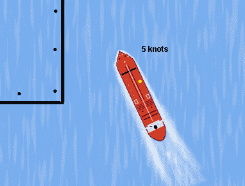
Would the indicated ground speed be suitable when berthing a large vessel?
The approach speed is essential to maintain steerage when coming alongside.
The approach speed is way too fast, even for a vessel in ballast.
The speed is optimal if wind and current are negligible.
Any speed below 5 knots is always safe for berthing.
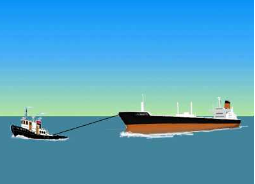
A tug is connected to the bow of a vessel. Will the force exerted by it be the same at any ahead speed?
No, when the ahead speed of the ship increases the force exerted by the tug will also increase.
No, on the bow the tug uses power to run with the vessel, which reduces the available power on the towline.
Yes, the force exerted by the tug is independent of the vessel’s speed.
Yes, as long as the tug’s engines are running at full power.
How frequently should reports from protection and environmental work be sent to shore based management?
Biannually.
Monthly.
Annually.
Every voyage.
What is the result of an «unusually large metacentric height»?
The vessel will have a great bending moment.
The vessel will roll violently.
The vessel will lose stability and capsize easily.
The vessel will remain completely stable with minimal motion.
How often are «abandon ship» drills required to be held on cargo vessels according to SOLAS?
Once every week.
Once every month.
Once every three months.
Once every six months.
Any ship of 10 000 tons gross tonnage and above shall be fitted with oily-water separating equipment for the control of machinery space bilges. What kind of equipment is required in this connection?
Oily-water separating equipment only.
Either Oil filtering equipment, or Oily-water separating equipment, or combination of both.
Only oil skimmers are required.
Any filtering equipment that can remove solids from bilge water.
To get priority with radio-communication, one must notify the coast-station that the call is:
A personal call.
Routine call.
An urgent call.
Safety call.
The log-in of an Inmarsat-C installation is important:
To inform the LES, that one is available for messages offered.
To inform the NCS that one is available for messages offered.
To inform the ship’s master that messages have been received.
To allow automatic switching to satellite voice communication.
With an Inmarsat-C terminal the option ‘PSTN’ for addressing is available. This option:
Delivers the message as a fax.
Is to deliver a message by telephone via a modem on the computer of the subscriber.
Sends the message via email only.
Allows sending the message as a voice call.
On a MF/HF-transmitter-receiver there is a volume control. Another name for this is:
LF-gain.
RC-gain.
AF-gain.
S-meter adjustment.
When planning to cross an ocean, is it always best to use great circle sailing?
Yes – because it is the easiest sailing to compute and then follow.
No – because there could be environmental or regulatory restrictions.
Yes – because it always guarantees the safest route regardless of conditions.
No – because great circle routes are only used in coastal navigation.
The value of GZ is no longer able to be calculated using GM Sine Angle of Heel formula at?
Less than 5 degrees angle of heel to the side of the heavy load.
Larger angles of heel.
Exactly at 0 degrees angle of heel.
Only when the vessel is fully loaded with cargo.
On a General Cargo vessel, a 16T derrick should be tested to a proof load of:
20T.
18T.
16T.
24T.
Your vessel is power-driven and making way in open water. This vessel is sighted wide on the port bow. Its bearing is opening, but its distance is closing rapidly. Which of the following is a correct assessment of the situation and the action to be taken?
Risk of collision is deemed to exist and I will make a broad alteration of course to starboard, sounding one short blast. I will re-assess the situation when the alteration is carried out.
Risk of collision is deemed not to exist and I will maintain my course and speed. I will continue to monitor the situation.
Risk of collision exists and I will immediately stop engines and sound three short blasts.
Risk of collision exists and I will alter course to port while sounding two short blasts.
What type of vessel is identified by the displayed shapes?
A vessel not under command.
A vessel restricted in its ability to manoeuvre.
A vessel engaged in fishing.
A vessel constrained by her draught.
Under most circumstances, how will communication be carried out between a ship and a SAR helicopter?
On 121.5 MHz.
On VHF Ch 16.
On MF 2182 kHz.
On UHF military frequency only.
With a davit launched lifeboat, what weight is required by SOLAS regulations to be used for the 5 yearly test of the davit and brake system?
The equivalent to the total weight of the lifeboat when loaded with its full complement of persons and equipment.
1.1 times the total weight of the lifeboat when loaded with its full complement of persons and equipment.
0.75 times the total weight of the lifeboat when fully loaded.
Only the empty weight of the lifeboat without persons or equipment.
If W = Displacement, L = length, B = Breadth, D = depth of vessel, Cb = Block Coefficient, Cw = Coefficient of Waterplane, RD = Relative Density, then:
W = L × B × D × CB.
W = L × B × D × CB/RD.
W = L × B × D × Cw.
W = L + B + D + CB/RD.
The majority of conventions adopted under the auspices of IMO fall into which of the three main categories:
Maritime Safety, STCW, Maritime Security.
Maritime Safety, Prevention of Marine pollution, Liability and compensation.
STCW, SOLAS, MARPOL.
Maritime Security, SOLAS, Search and Rescue.
The ship’s lifting plant must be proof load tested and all parts thoroughly examined at intervals not exceeding:
5 years.
1 year.
3 years.
10 years.
During a pre-loading survey on board a General Cargo ship, the most efficient method of testing the weather tightness of the hatch covers is considered to be:
Ultra sonic test.
Hose test.
Visual inspection only.
Tap test with a hammer.
The IMO Cargo Stowage and Securing Code (CSS) indicates in the «Rule of Thumb», the total strength of the lashings on each side of a heavy lift; what is the stated value?
The Maximum Securing load of the lashings must equal the weight of the cargo unit.
The Maximum Securing load of the lashings must equal twice the weight of the cargo unit.
The Maximum Securing load of the lashings must equal half the weight of the cargo unit.
The Maximum Securing load of the lashings must equal three times the weight of the cargo unit.
The segregation requirements for Dangerous Goods to be loaded on a General Cargo ship may be obtained by referring to:
The IMO Bulk cargo Code.
The IMO International Maritime Dangerous Goods Code.
The SOLAS Chapter II-2 regulations.
The CSS Code only.
A loaded General Cargo ship is bound from Brazil to Rotterdam during winter time. During the voyage, ventilation in cargo spaces should:
Be carried out during voyage, as the vessel is moving from warm to colder areas.
Would only be carried out once, just before discharging the cargo.
Never be carried out in cold climates.
Only be carried out at port of departure.
A general cargo vessel is loading to its Summer Marks. Upon completion of loading, the final level of the water would be at:
The top of the summer load line mark.
The bottom of the summer load line mark.
Midway between the top and bottom of the summer load line mark.
At the winter load line mark instead.
Test about Deck department, Management level, General Cargo Vessel
Try online
Did you find mistake? Highlight and press CTRL+Enter