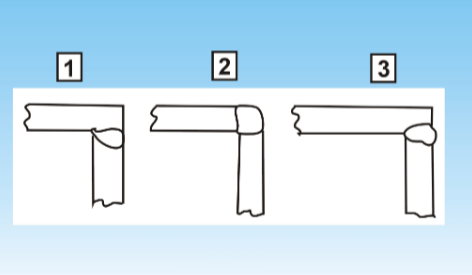
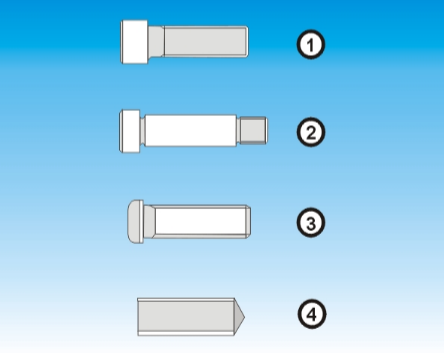
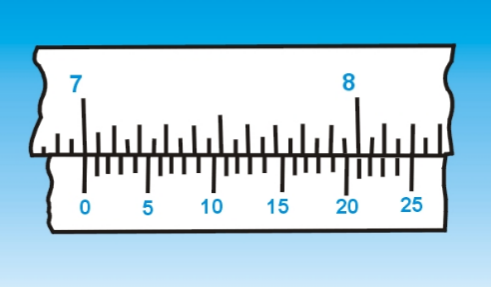
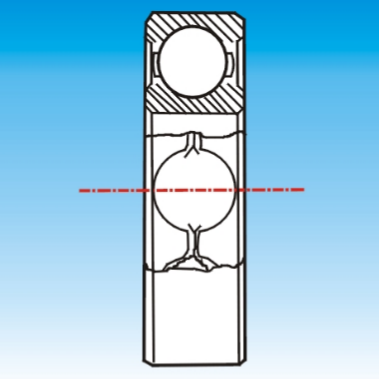
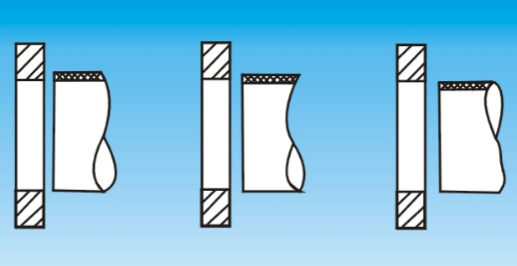
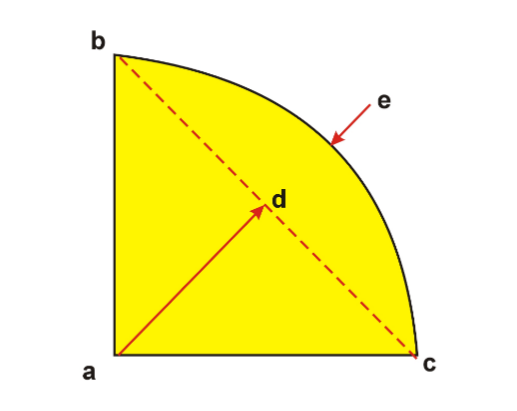
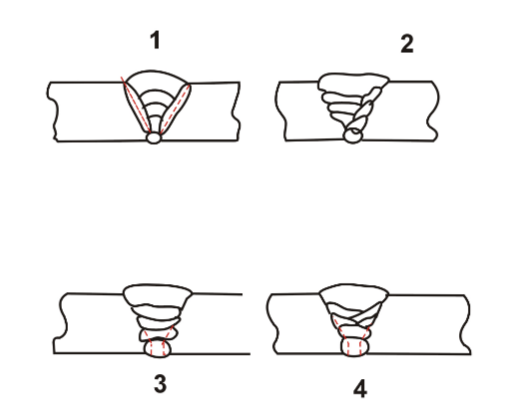
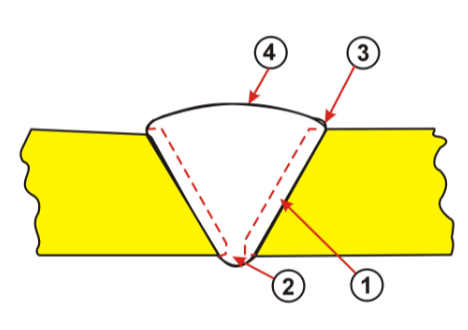
What feature of a good weld is indicated by No. 4?
Good penetration.
Blend with parent metal.
Contour even and regular.
Backing bar has been used.
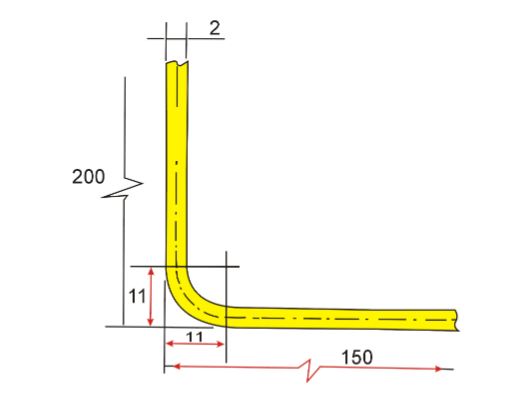
Mild steel plate 2 mm thick bent in vees would produce an approximate inside bend radius of?
1,0 mm.
1,5 mm.
2,0 mm.
2,5 mm.
What is the system called which gives explicit instructions on drawings which cannot be misinterpreted?
Cumulative effect.
Geometrical tolerancing.
Limits and fits.
Tolerances.
When carrying out a repair using a bonded resin what precautions should be observed?
Use gloves, do not smoke,use barrier cream and use safety goggles.
Use gloves, ensure below flash point of material, use brush and use safety goggles.
Use gloves, use stirrer, take care opening tins and use safety goggles.
Use gloves, use brush use barrier cream and use safety goggles.
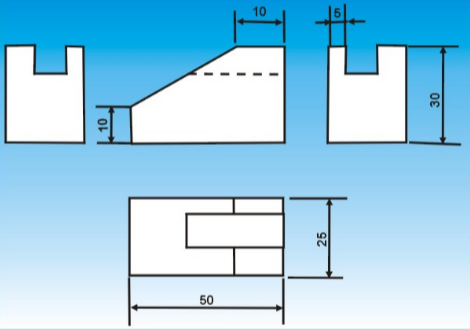
Looking at the drawing, can this component be made?
Yes.
No - material is not given.
No - scale is not given.
No - relevant dimensions are missing.
Which is the preferred table to be checked to ensure a sound weld is produced during an arc welding process?
Electrode. Arc length.
Arc length. Welding current.
Arc length. Electrode angle.
What presents the greatest danger when sharpening a chisel on a grinding machine?
Wrong grade of wheel.
Worn wheel.
Exsessive rest clearance.
Using too much force.
When tempering a cold chisel, at which part of the chisel is the flame directed?
The cutting edge.
The hammer end.
Mid-way.
The beginning of the tapered portion.
What may be done to improve the finished appearance of a self-secured joint?
Caulk.
Solder.
Burnish.
Fit edging wire.
What special care do an engineer's dividers need:
Keep oiled.
Keep screw thread clean.
Always use same leg in centre pop.
Protect points when not in use.
Thermoplastic type adhesives soften when subject to heat, are fusible and soluble. They are not suitable for?
Leather.
Wood.
Aluminium.
Fabrics.
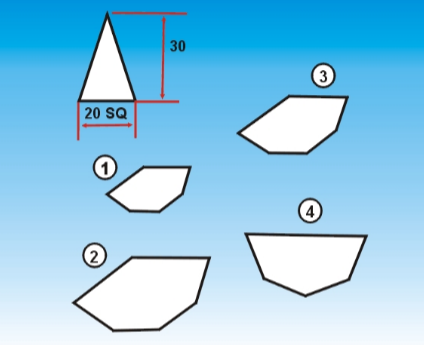
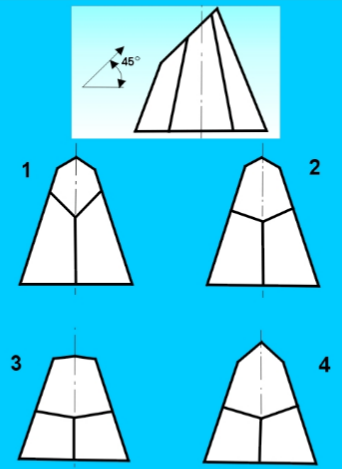
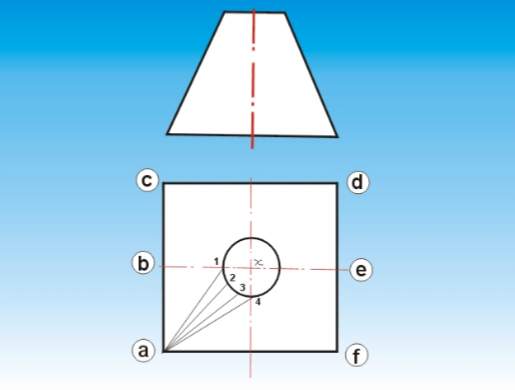
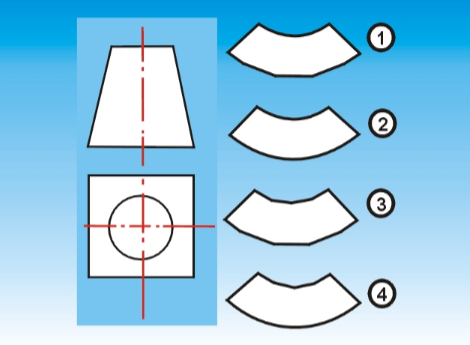
The ventilation trunk shown goes from square to round section. What does its development look like?
No. 1.
No. 2.
No. 3.
No. 4.
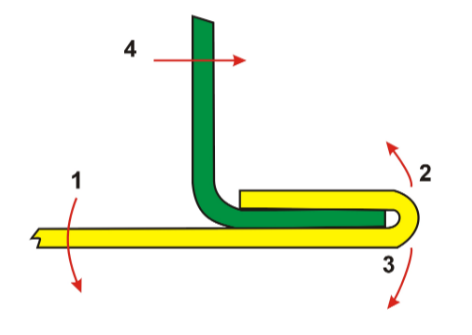
To make a single grooved seam from 1 mm plate, in what order would the following operations be carried out?
Set to thickness. Hook together.
Fold. Hook together.
Flatten. Set to thickness.
Fold. Set to thickness.
In the method of datum dimensioning (sometimes known as parallel dimensioning), what is the advantage over conventional dimensioning?
Makes machining easier.
Improves positional accuracy.
Reduces the marking out time.
Ignores conventions.
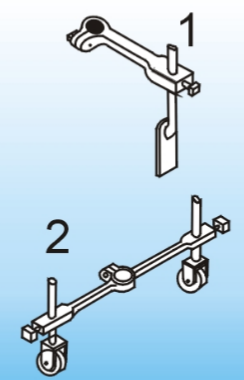
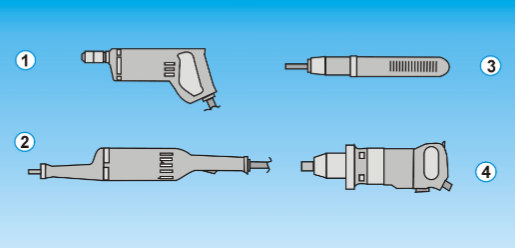
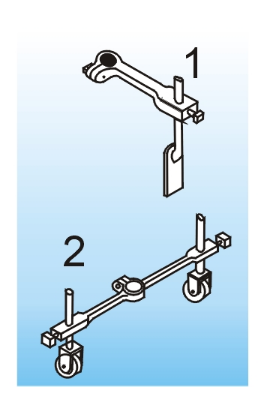
What is the attachment shown in No. 2?
Small circle guide.
Roller guide.
Spade guide.
Radius bar.
The safety features for a welded acetylene gas cylinder are?
Spring load relief valve.
Bursting discs.
Fusible plugs.
Gas loaded relief valves.
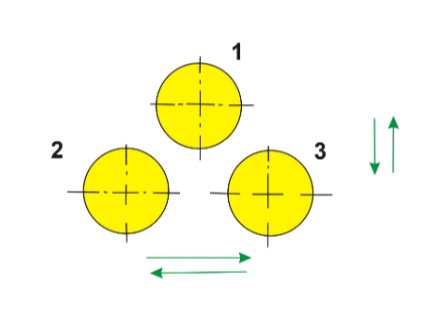
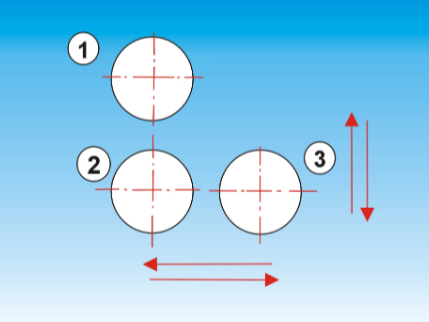
The sketch shows the configuration of a pinch bending roll. How does this operate?
Roller No. 2 rises.
Roller No. 1 is lower.
Rollers No. 2 and No. 3 rise.
Roller No. 3 rises.
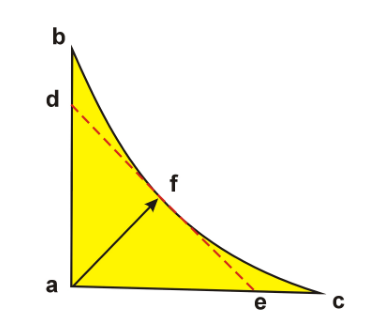
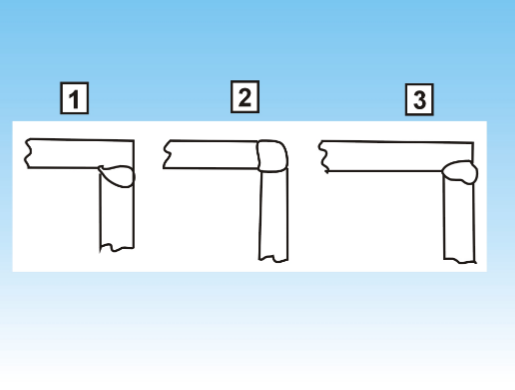
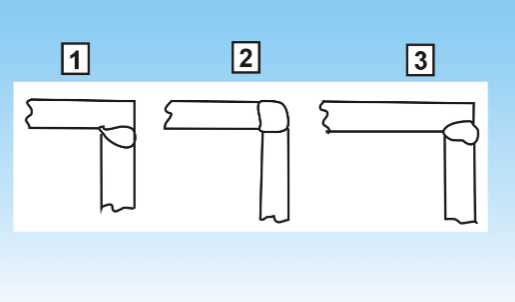
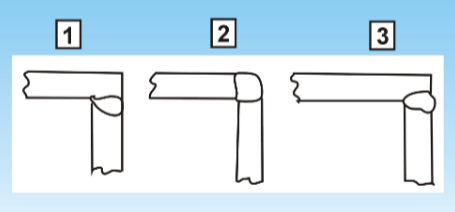
A short box girder is fabricated from 18 mm thick steel plate. What edge preparation is necessary for No. 3?
Double bevel.
Single bevel.
None.
Single U.
A component with a working temperature of 325 °C is to be joined using epoxy resin. Which of the following is suitable?
Epoxy silicone.
Epoxy phenolic.
Epoxy nitrile.
Phenolic nitrile.
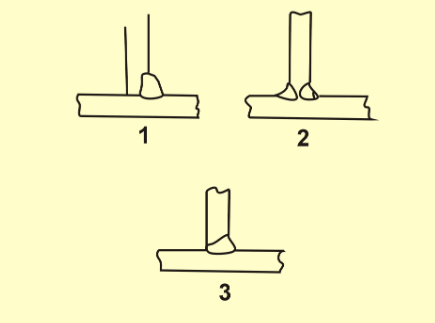
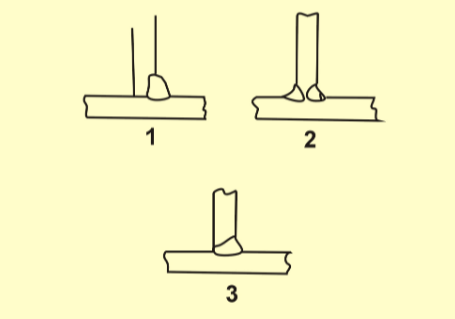
The figures show welded tee joints. What preparation is required for No. 1?
Single V.
Double V.
Double U.
None.
Prior to welding, plate edges are prepared to?
Allow filler to the flow.
Give economical use of the filler.
Give a flat surface to the filler.
Allow maximum penetration of the filler.
Which system of welding uses a shield of Argon and a non-consumable electrode?
Gas metal arc.
Metal inert gas.
Manual metal arc.
Tungsten inert gas.
For a particular welding arrangement, the decision is to use a manifold system. Why would this be chosen?
Because of the long time span of welding.
The discharge rate is too high from single bottle.
Better stability when using large bore nozzles.
Cost - two cylindersare cheaper than one.
Plates of less than 6 mm thickness (T) have no edge preparation but what ratio of (T) is the gap?
T/6.
T/4.
T/2.
T/1.
When tempering use is made of the microscopic oxide film formed on the surface, in what sequence does change occur?
Straw. Brown.
Straw. Purple.
Brown. Purple.
Purple. Straw.
A 90° centre punch is specifically designed to?
Act as a pin punch.
Pop mark for drilling.
To scribe.
Give long life.
Given a set of odd-leg calipers and a small cork, what use is the cork?
Cork is used as centre when marking out.
Cork is to protect the point.
Cork has the same properties as silica gel and prevents corrosion.
Cork is a sales gimmick.
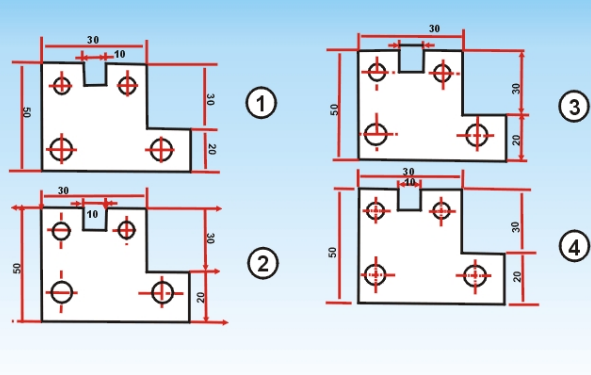
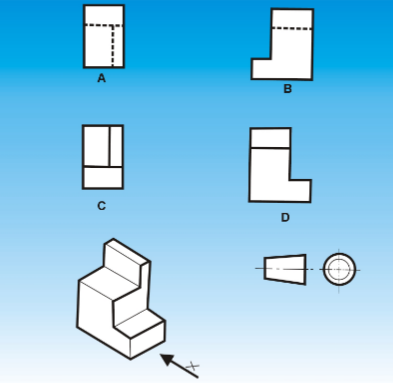
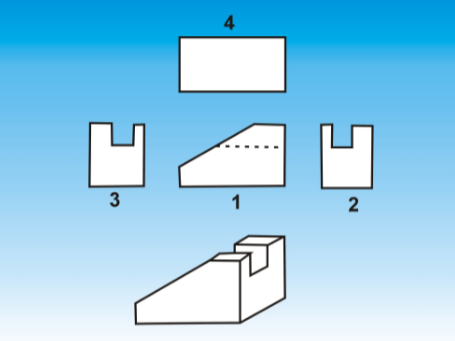
In the sketches, which view is incomplete?
No. 1.
No. 2.
No. 3.
No. 4.
If a view is projected in a direction which is not horizontal or vertical, what name is given to the view?
An auxiliary view.
An isometric view.
An elevated view.
A pictorial view.
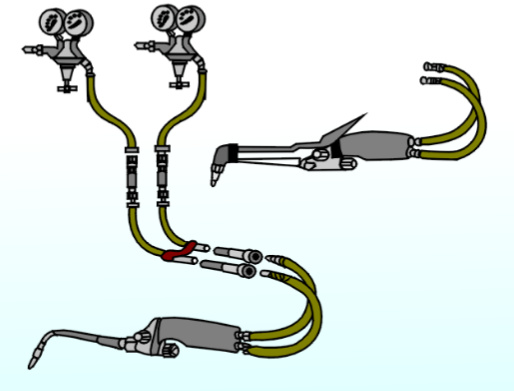
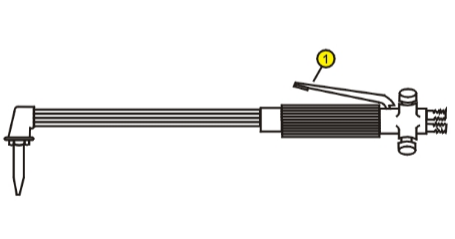
Sketch shows a gas cutting blowpipe. What is control No. 1 used for?
Acetylene control.
Pre-heat oxygen.
Mixing gases.
Cutting oxygen.
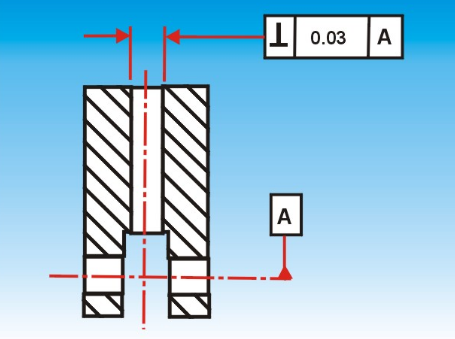
What does the geometrical tolerancing shown in the drawing refer to?
Flatness.
Roundness.
Screw thread.
Squareness.
Welcome to the website where you can pass online the Seafarer Evaluation Training System (SETS) test on «EO1: Use Hand and Power Tools for Fabrication and Repair». Practice like this will help you as a marine specialist improve your knowledge with the help of online studying and appraisal practice. SETS based on practical information and marine specialists experience.
SETS tests developed for evaluating seaman basic knowledge by company “Naval Education Services” is an evaluating online-tool, used for revealing any professional preparation needed in specific fields of knowledge, defined by STCW Section A-V/1-2.
SETS tests have proven themselves as good tools for the selection and recruitment process, as well as advancing the level of knowledge of the current officers and crew.
Current test contains SETS questions in area «EO1: Use Hand and Power Tools for Fabrication and Repair». Those questions can be used for competence verification specialist capable of preventing accidental situations related with transporting safety, or also for self-examination.
«EO1: Use Hand and Power Tools for Fabrication and Repair» subject includes theoretical and practical information about advanced training for work on any type of vessel. This test assesses a candidate’s proficiency in selecting, operating and maintaining a wide array of hand and power tools common in a shipboard environment. Participants must demonstrate a thorough understanding of safety protocols, including the correct use of Personal Protective Equipment (PPE) and hazard mitigation for specific tools like angle grinders and welding equipment. A key component of the evaluation involves performing precise fabrication tasks, such as measuring, cutting and joining metal pieces to create or repair a shipboard component. Candidates will be evaluated on their ability to conduct pre-use inspections on power tools to identify potential defects, wear or safety hazards before operation. The exam includes scenarios requiring the proper selection of tools for specific maintenance jobs, such as disassembling a pump using correct wrenches and pullers or threading a pipe. Practical skills in using cutting tools (e. g., plasma cutters, oxy-acetylene torches) and shaping tools (e. g., hydraulic presses, drills) for steel repair are rigorously tested. Knowledge of post-operation procedures, including proper tool cleaning, storage and the reporting of any malfunctions, is a critical part of the assessment. Successful completion validates the advanced competency required to perform safe, effective and efficient fabrication and repair work on any type of vessel using both hand and power tools.