Bio-LNG and Biomethanol: Key Components of Decarbonisation in Maritime Transport
The emergence of bio-LNG and biomethanol is part of a “holistic approach” to decarbonisation, according to new research. A study prepared by a multinational stakeholder group indicates that biofuels are expected to be the primary solution for decarbonising the merchant shipping sector over the next 15-20 years.
Last year, global entities Eni (energy), Fincantieri (shipbuilding), and Registro Italiano Navale (certification) signed an agreement to form a “global observatory” to monitor and assess decarbonisation solutions for the sector. They recently released their first outlook report, titled “Sustainable Maritime Transport Outlook”. Developed with the technical support of Bain & Company, the study aims to accelerate the decarbonisation of maritime transport in line with the International Maritime Organization’s (IMO) net zero target for 2050.
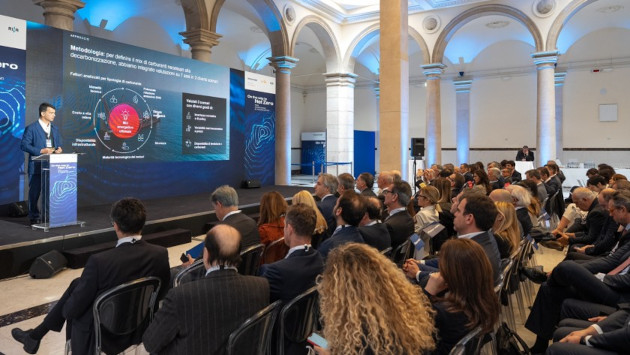
Source: eni.com
The group states that the maritime industry is responsible for approximately 3 % of global CO2 emissions and is committed to achieving carbon neutrality by 2050. To reach this goal, a clear and realistic roadmap is essential, minimizing uncertainty and risk for investors while providing practical, economically viable solutions for the entire industry.
For the first time, the study offers a global overview of viable decarbonisation options tailored to different vessel segments and regions. It integrates volume assessments with a comprehensive analysis of cost implications for shipowners and investment requirements across the logistics and port infrastructure chain.
Currently, traditional fuels account for 93 % of total energy consumption in the sector, but the study highlights a progressive shift towards alternative propulsion sources, with about 50 % of new ship orders in 2023 being dual-fuel designs. Between 2030 and 2040, Europe and North America are expected to see a significant transition from fossil fuels to hydrotreated vegetable oil (HVO) biofuels and LNG, including its bio-derived form. HVO is already available at key ports and offers cost resilience, while LNG remains economically competitive in the short term, though it will face increasing regulatory penalties from 2040 onward.
To achieve carbon neutrality by 2050, the industry will also need to explore new alternative fuels, such as synthetic fuels produced from green hydrogen, which are not expected to be cost-competitive with fossil fuels until after 2040. In the long term, biofuels from renewable feedstocks and synthetic fuels will be crucial for decarbonising medium- and long-range merchant vessels, while bioenergy solutions will suffice for short-range ships.
In the cruise segment, small to mid-sized vessels (luxury and exploration classes) are expected to adopt both HVO biofuels and synthetic fuels, while larger vessels (upper premium and contemporary classes) will rely more on bioenergy sources like HVO, bio-LNG, and biomethanol.
Independent energy research company Rystad notes that while biofuels are currently a viable option, global demand for biodiesel in shipping could exceed 140 million tonnes of fuel oil equivalent by 2028. However, considering production risks, actual output levels, and competition from other sectors, the volume of biofuels realistically available for shipping may diminish further.
Successfully managing this transition will require significant long-term investment in port infrastructure to support the supply and distribution of alternative fuels. The Eni, Fincantieri, and RINA group projects that investments of up to €24 billion will be needed within the European Union alone. HVO biofuels and LNG will require relatively limited investment (around 15 %) due to their compatibility with existing systems, while synthetic fuels will demand substantial investment (around 85 %) as the necessary infrastructure has yet to be developed.