
China Completes 15th Arctic Scientific Expedition with Xue Long 2’s Return to Shanghai
China has concluded its 15th Arctic scientific expedition, with the icebreaker Xue Long 2 returning to Shanghai on September 26. This expedition represents the country’s most extensive activities in the Arctic Ocean to date.
Led by China’s Ministry of Natural Resources, the summer expedition involved four vessels, including icebreakers Xue Long 2, Ji Di, Shen Hai Yi Hao, and Tan Suo San Hao, which operated in the polar region for two months. Additionally, a fifth vessel, Zhongshandaxue Ji Di, managed by Sun Yat-sen University, also visited the Arctic.
During the expedition, the US Coast Guard monitored the vessels as they entered the Extended Continental Shelf (ECS), where innocent passage is allowed, but economic or scientific activities require permission from the host state.
Source: Ministry of Natural Resource/Xinhua
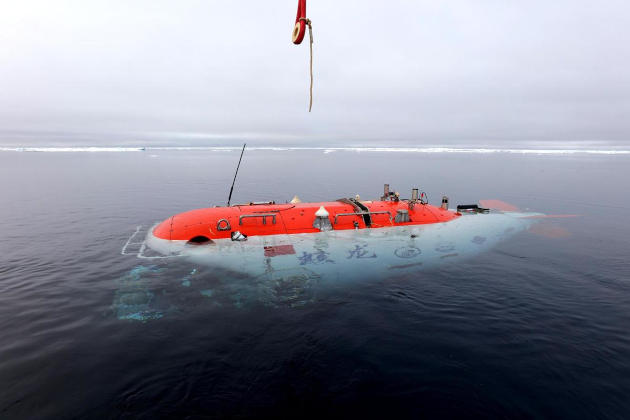
A significant event during the expedition was the launch of the submersible Jiaolong from Shen Hai Yi Hao in early August. This marked the first instance of China conducting manned deep-sea diving in the Arctic Ocean, showcasing the country’s increasing capabilities in deep-sea exploration. While the exact extent of Jiaolong’s operations in the Arctic remains unclear, it previously reached a depth of 3 759 meters in the South China Sea, making China the fifth nation to send a manned craft below 3 500 meters.
On August 6, when Jiaolong dove, its mothership was operating in the Chukchi Sea, approximately 300 nautical miles northwest of Alaska. The US Coast Guard dispatched C-130J Hercules aircraft multiple times to monitor the activities. In late August and September, US icebreakers Healy and Storis also shadowed the Chinese vessels, including Xue Long 2. While Healy remains in the Arctic, Storis has returned to Kodiak.
According to China’s Ministry of Natural Resources, this year’s expedition has enhanced the country’s understanding of the rapidly changing Arctic environment. The vessels conducted extensive marine surveys along the Chukchi Plateau, the Canada Basin, and northern Russia in the central Arctic Ocean. China’s state-owned news agency Xinhua reported that the vessels performed “multidisciplinary investigations” along the sea ice edge and completed three-dimensional observations.
The People’s Daily, the official newspaper of the Central Committee of the Chinese Communist Party, stated that the operations aimed to “fill the gap in observation data in the high-latitude areas of the Arctic Ocean,” which is expected to support improved marine environment forecasting capabilities. Enhanced understanding of sea ice changes and accurate forecasting will be crucial for facilitating future commercial operations.
Currently, several Chinese commercial vessels are navigating through the Arctic, including the first-ever container ship providing direct service to Western Europe.