International Maritime Organization Announces Major Investments for Net-Zero Emissions in Shipping
The International Maritime Organization (IMO) has announced that the global shipping industry is poised to make significant investments aimed at achieving net-zero emissions. This transformation is expected to impact supply chains, business models, vessels, ports, and the maritime workforce.
In April of this year, the IMO approved new regulations regarding net-zero ship fuels and emissions under the IMO Net-Zero Framework, which are scheduled for adoption in October.
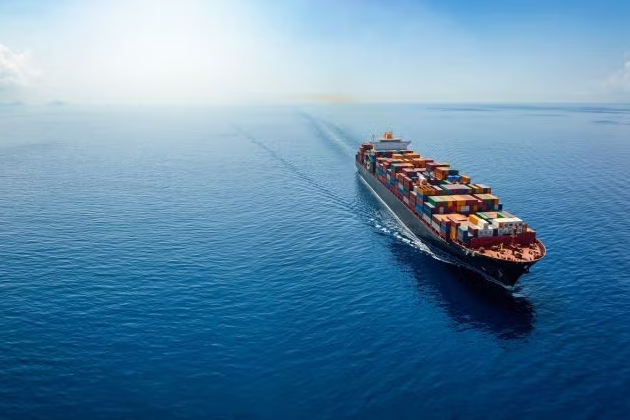
Source: Sven Hansche/Shutterstock
The demand for substantial investments in decarbonization is growing, particularly in the production of alternative fuels needed to replace the 350 million tonnes of fuel oil consumed by ships each year. Additionally, port infrastructure and bunker operations will require upgrades to safely provide clean energy to vessels at ports around the world.
According to the World Shipping Council, around 200 container ships are already in operation with the capability to use zero or near-zero emission fuels (ZNZ fuels), and nearly 80 % of new orders for container ships and vehicle carriers are expected to include similar hybrid capabilities.
At the Blue Economy Finance Forum in Monaco, IMO Secretary-General Arsenio Dominguez stated:
“Regulations alone cannot do the job. We need technological development and we need alternative fuels… And that can only happen in one way – with investment.”
The IMO Net-Zero Framework introduces a dual approach, establishing a global fuel standard that limits the greenhouse gas (GHG) intensity of marine fuels, along with a pricing mechanism for GHG emissions from ships. This regulatory framework aims to signal demand to fuel producers and incentivize early adopters—shipping companies that implement low- and zero-emission solutions ahead of others, allowing them to share their insights and experiences.
The framework complements previous IMO measures focused on improving energy-efficient ship design, operational enhancements, and carbon intensity ratings, with reviews scheduled every five years to progressively tighten emission limits. Dominguez emphasized that these regulations will be mandatory for all ocean-going vessels engaged in international trade, regardless of their flag.
The transition will require significant training efforts, with an estimated half a million seafarers needing upskilling by 2030. Furthermore, safety protocols will need comprehensive updates to ensure the safe and efficient use of new fuels.
At the same event, CMA CGM executive vice-president Christine Cabau-Woehrel remarked, “It is a complete transformation of the shipping business. It will take ecosystems to do it together.”