Overlapping GHG Regimes: NYK’s Warning on Risks to Global Shipping
NYK Group Europe President and CEO Carl-Johan Hagman has warned that overlapping regimes for regulating maritime greenhouse gas (GHG) emissions would be “hugely detrimental” to global shipping, as they would impose multiple standards on bunker fuels. He urged policymakers to pursue a unified global framework instead. In mid-October, International Maritime Organization (IMO) member states voted to delay adoption of the Net-Zero Framework by one year, amid strong opposition from the US, casting doubt on the future of decarbonization regulations.
The EU has extended its Emissions Trading System (ETS) to cover shipping since 2024 and will impose FuelEU Maritime rules on marine fuel GHG intensity from January 2025. Many industry experts, including S&P Global Energy, anticipate a more fragmented regulatory landscape following the IMO delay, with countries like Turkey and China potentially introducing their own shipping emission rules. “It is important that both the EU ETS and FuelEU Maritime do not trigger or stimulate similar actions from other parts of the world,” Hagman told Platts in a recent interview. “That would be hugely detrimental to shipping and to global trade.”
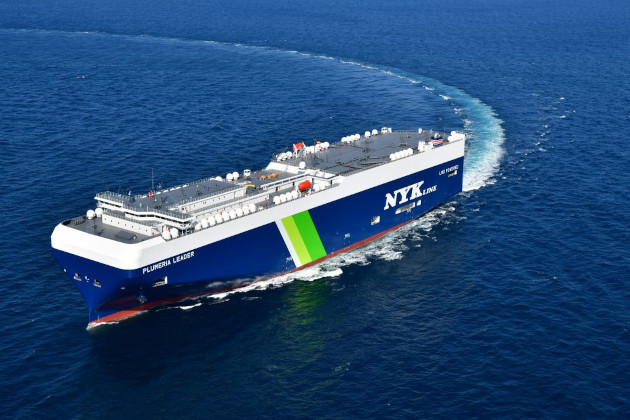
Source: nykroro.com
Regional regulators may be “well-meaning in trying to decarbonize the world” but could create “complexity that I think people outside the business do not fully understand,” said Hagman, who leads Japanese shipping giant NYK’s European operations. The EU ETS accounts for tank-to-wake emissions, while FuelEU Maritime uses a well-to-wake approach. The IMO might apply different default emission factors for bunker fuels than the EU, leading to logistical challenges: the same physical fuel could have varying emission profiles across jurisdictions.
The European Commission had pledged to “review” the ETS for shipping and FuelEU Maritime if the IMO framework is adopted, but some industry players and EU member states hope for an explicit rollback. On NYK’s path to net zero by 2050, the company has set interim targets to cut scope 1 and 2 GHG emissions by 45 % by 2030 from 2021 levels—stricter than FuelEU Maritime or the proposed IMO framework.
As a fossil fuel, LNG complies with FuelEU Maritime well into the next decade, reducing emissions by 20 %-30 % versus conventional oil-based fuels and generating compliance surpluses. NYK shares these surpluses across its fleet for oil-burning ships and is exploring sales via pooling with other operators. The OceanScore Pool-Price Index for FuelEU compliance in pooling was €215.75/mtCO2e ($249/mtCO2e) on November 6, up 4.4 % from the prior month. Meanwhile, NYK used 251 000 metric tons of B24 biobunker in fiscal year 2024-25 (April-March), a sharp rise from 6 287 mt the previous year. “We are relatively large buyers of biofuels in Europe,” Hagman noted. “It is very locally produced, and it is the logistics solutions, to a degree, that determine the price.”
The IMO’s Net-Zero Framework was set to impose a carbon price on maritime GHG emissions from 2028, but the delay pushes this back by at least a year. Hagman believes a carbon price would drive more offtake agreements: “Without large-scale offtake agreements, production volumes will not materialize.” Currently, green fuels aren’t scaling, keeping prices high. October averages in Rotterdam: $10.47/GJ for 0,5 % sulfur fuel oil (most common bunker); $13.84/GJ for LNG; $39.20/GJ for unsubsidized bio-LNG; and $45.08/GJ for e-ammonia delivered to Northwest Europe (per Platts bunker cost calculator).
Passing sustainable fuel costs to cargo owners has been tough outside cruise, container, and vehicle sectors, Hagman said. “Very few are willing to pay any kind of cost increases, regretfully. Any reductions beyond what the law requires are really altruism from the shipowner or ship operator’s point of view.“