Russian Research Vessels Linked to Extensive Espionage Activities in Baltic and North Seas
Months after NATO raised alarms about covert espionage missions conducted by Russian research vessels targeting critical infrastructure in Europe, a comprehensive investigation has revealed the scale of the threats.
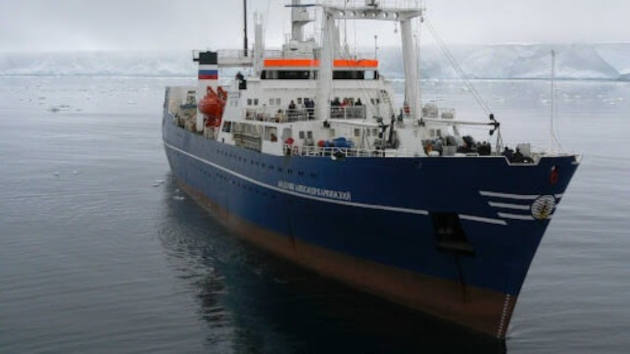
The international research project into Russian maritime espionage has uncovered that the Kremlin has been utilizing research vessels with armed soldiers onboard to systematically spy on gas pipelines, data cables, wind farms, and military installations in the Baltic and North Seas. The investigation, carried out by Dutch outlet Pointer and journalists from six other countries, indicates that these seas have become the epicenter of Russian espionage activities since the invasion of Ukraine, with at least 72 research vessels linked to espionage or sabotage operations.
By decoding over 1 000 intercepted Morse messages and analyzing AIS signals from the ships, the researchers determined that Russian vessels have undertaken 428 voyages since February 2022. Their suspicious movements within the exclusive economic zones (EEZ) of European countries point to espionage activities; in at least 54 instances, the vessels sailed at extremely slow speeds for hours, followed erratic zigzag patterns, or halted completely.
Источник: PMJE
Notably, these unusual movements have been particularly pronounced off the coast of Denmark, where Russian research vessels, ostensibly engaged in hydrographic surveys or rescue operations, have also conducted reconnaissance missions. At least 15 voyages were recorded near critical infrastructures in Denmark. Other nations targeted by these spying missions include Estonia, Norway, the Netherlands, the United Kingdom, Finland, and Germany.
The investigation revealed that these anomalous ship movements often occurred near essential infrastructures, such as gas pipelines, data cables, and wind farms, with a likely intent to sabotage. Specific incidents involved Russian research vessels operating near a NATO submarine diving area in Germany, wind farms off the Dutch coast, and the Baltic Connector gas pipeline between Estonia and Finland.
Identified vessels involved in reconnaissance missions include the Akademik Karpinsky, Admiral Vladimirsky, and Akademik Boris Petrov. Over the past three years, these ships have repeatedly navigated slowly through the Dutch EEZ. In June, another vessel, the Sibiryakov, was noted sailing at low speed through the North Sea near the Europipe gas pipeline connecting Norway and Germany.
All vessels participating in these clandestine operations are accompanied by armed soldiers, including members of the Spetsnaz, a military unit specializing in reconnaissance and sabotage. Some ships are equipped with military radar, mini-submarines, and underwater drones. To conceal their activities, these vessels often turn off their AIS systems to avoid detection.
The investigation comes in the wake of NATO alerting its members about Russia’s use of research vessels to map civilian infrastructure in member countries. These concerns have prompted nations to enhance their monitoring of suspicious Russian ships.
James Appathurai, NATO Assistant Secretary General, informed the team that Russian research vessels have been utilizing sophisticated equipment to map critical infrastructure with the intent to sabotage it. He stated, “In the past six months, we have seen an increase in threats against our countries. These include sabotage, political interference, disinformation, cyberattacks, forced migration, and attacks on critical undersea infrastructure.”