.
Site categories

LNG & LPG

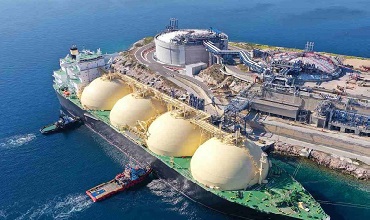
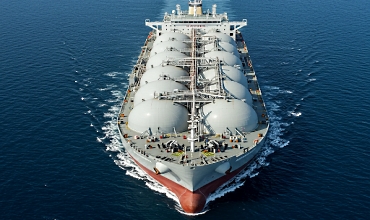
LNG (Liquefied Natural Gas) and LPG (Liquefied Petroleum Gas) are two types of gases which are go through a process of liquefaction for transportation and storage purposes. Although similar in their liquid state, they differ significantly in composition, usage, and production methods.

LNG (Liquefied Natural Gas)

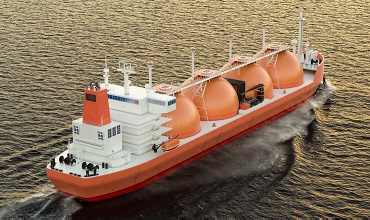
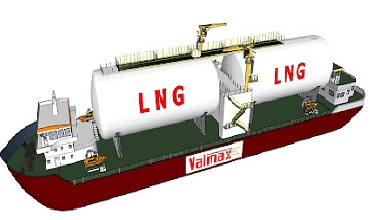
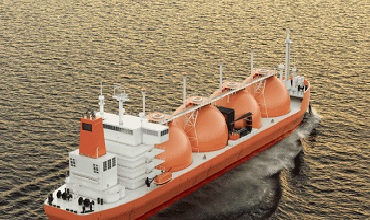
LNG is primarily methane (CH4) gas that has been cooled to a temperature of approximately -162 degrees Celsius (-260 degrees Fahrenheit). At this temperature, methane condenses into a liquid form, which takes up about 1/600 th of the volume it occupies as a gas at standard atmospheric temperature and pressure. This significant reduction in volume makes LNG economical to transport over long distances where pipelines are not feasible, such as across oceans. LNG is used mainly for heating and as a fuel for electricity generation and is increasingly used in the transportation sector, especially for ships and heavy-duty vehicles.

LPG (Liquefied Petroleum Gas)

LPG is a mixture of propane (C3H8) and butane (C4H10), gases that are found naturally in crude oil and natural gas. LPG is produced during natural gas processing and oil refining. It is stored and transported in liquid form under moderate pressure, which makes it easier to store and handle compared to LNG. LPG is widely used as a fuel for heating, cooking, and in vehicles. It is also used in industrial applications and is a popular choice for portable cooking and heating equipment in areas not connected to a natural gas network.

Both LNG and LPG play crucial roles in the global energy supply, offering cleaner alternatives to traditional fossil fuels like coal and oil. They contribute significantly to reducing emissions and air pollution in various applications.
LNG Transportation Risks and Essential Insights 740
Guide for Planning Gas Trials for LNG Vessels 588
Analysis of Incidents 622
Challenges Developing Natural Gas Infrastructure 672
The Ship/Shore Interface – Communications Necessary for Matching Ship to Berth 873
The Controlled Dispersion of Liquid Spill and Vapour Emission Incidents by Water Spray 654
Pipelines in Marine Terminals: Key Considerations for Handling Liquefied Gas 606
Floating LNG Terminals General Overview 527
Emergency Shut-Down and Emergency Release 855
Loading Arms (Hard-Arms) – Specifications, Operation, and Maintenance 835
Minimize SCC in Liquefied Ammonia Tanks 626
Comprehensive Overview of LNG and LPG Cargo Hoses in STS Operations 849
Surveys On Reliability Centered Maintenance (RCM) 622
Guidelines for Automatic Cargo Tank Overfill Protection Aboard Gas Carriers 800
Accident Prevention The Use of Hoses & Hard-Arms at Marine Terminals Handling Liquefied Gas 626
Surveys on Existing LNG Ships 633
The Selection and Testing of Valves for LNG Applications 604
Marine Safety System Integration and Compliance 594
LNG Bunkering Guide – What It Is and How to Use It 807
LNG System Features and Controls 722
General Arrangement of LNG Custody Transfer System 734
Gas Control Station Workflow Management Guide 548
Key Components of Gas Steam Turbines: Couplings, Shafts and Bearings 717
Gas Handling Equipment for Efficient Gas Processing 654
LNG Cargo Handling Equipment in Maritime Operations 807
Key Systems for LNG Carriers Containment and Safety: Design and Operation 1330
LNG Cargo Handling Systems and Their Operations 1825
Engineering High Voltage Systems for LNG: Features & Safety 682
Electrical Safety in Hazardous Areas: Enclosures, Temperature Classes and LNG Carrier Zones 714
Electrical Safety in LNG Carrier Hazardous Areas 873
Load more * * *