.
Site categories

LNG & LPG

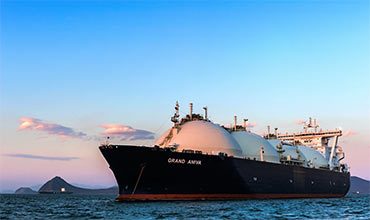
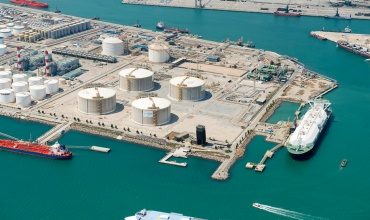
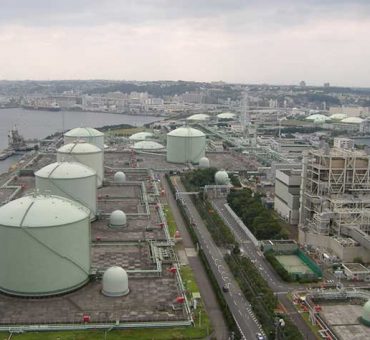
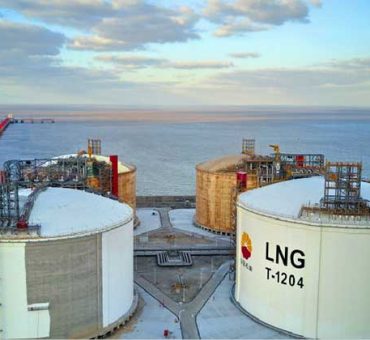
LNG (Liquefied Natural Gas) and LPG (Liquefied Petroleum Gas) are two types of gases which are go through a process of liquefaction for transportation and storage purposes. Although similar in their liquid state, they differ significantly in composition, usage, and production methods.

LNG (Liquefied Natural Gas)

LNG is primarily methane (CH4) gas that has been cooled to a temperature of approximately -162 degrees Celsius (-260 degrees Fahrenheit). At this temperature, methane condenses into a liquid form, which takes up about 1/600 th of the volume it occupies as a gas at standard atmospheric temperature and pressure. This significant reduction in volume makes LNG economical to transport over long distances where pipelines are not feasible, such as across oceans. LNG is used mainly for heating and as a fuel for electricity generation and is increasingly used in the transportation sector, especially for ships and heavy-duty vehicles.

LPG (Liquefied Petroleum Gas)

LPG is a mixture of propane (C3H8) and butane (C4H10), gases that are found naturally in crude oil and natural gas. LPG is produced during natural gas processing and oil refining. It is stored and transported in liquid form under moderate pressure, which makes it easier to store and handle compared to LNG. LPG is widely used as a fuel for heating, cooking, and in vehicles. It is also used in industrial applications and is a popular choice for portable cooking and heating equipment in areas not connected to a natural gas network.

Both LNG and LPG play crucial roles in the global energy supply, offering cleaner alternatives to traditional fossil fuels like coal and oil. They contribute significantly to reducing emissions and air pollution in various applications.

Transportation of Liquified Petroleum Gas and Ammonia Cargoes 2034
Manual about Liquefied Natural Gas Plant Relief and Flare Systems Design 3280
Usage of Equations of State in Liquefied Natural Gas Systems for Modeling Phase Behavior 1756
FAQ about Basic Facts, Safety and Security Clarifications of Liquefied Natural Gas 2675
Project Management of the Large-Scale Liquefied Natural Gas Facilities 2556
Liquefied Natural Gas as the Energy of the Future 1784
Safety, Risks and Security Aspects in Liquefied Natural Gas Industry 5836
Dynamic Simulation and Optimization of LNG Plants and Import Terminals 2494
Liquefied Natural Gas Plant and Regasification Terminal Operations 2794
Energy consumption Optimization and Improvements in the Natural Gas Liquefaction Process 2496
Development of Natural Gas Liquefaction Cycles based on Energy and Exergy Analyses 2298
Automation and Process Control of Liquefied Natural Gas Plants and Import Terminals 3485
Overview, Process and Technology of Natural Gas Liquefaction (NLG) 4590
Gas Conditioning and Natural Gas Liquids Recovery Technologies 3185
International trade of Liquefied Natural Gas in maritime industry 2943
Liquefied Natural Gas Projects, calculation of the cost of gas production 2814
Environmental aspects in Liquefied Natural Gas production 4254
Offshore supply chain of Liquefied Natural Gas 4581
Quality and Interchangeability of Natural Gas 3675
Process of Liquefied Natural Gas regasification 8206
Fundamentals of Liquefied Natural Gas 6832
General information and Rules for Ships carrying LNG and LPG 3502
Summary of Minimum Requirements for LNG and LPG tankers 2694
Operating Requirements for Ships carrying liquefied gas 2539
Special Requirements for LNG and LPG gas carriers 3427
Use of Cargo as Fuel on Gas Tankers 2576
Filling Limits for Cargo Tanks on Liquefied Gas Tankers 4470
Personal protection of crew on Gas Carriers 5443
Cargo Tank Instrumentation on Gas Tankers 4156
Mechanical Ventilation in The Cargo Area on Liquefied gas tankers 4267
Load more * * *